

Homebrew
13 July 2013
And so I brewed beer.
Well it’s rather easy really, especially when you receive a home-brew kit for St Valentine’s day… And you have great friends to help you out.
So, the kit. What is it ? Well it’s a 23L plastic container, it’s 30 x 75cc bottles, it’s a thermometer, a few ingredients, and a spoon.
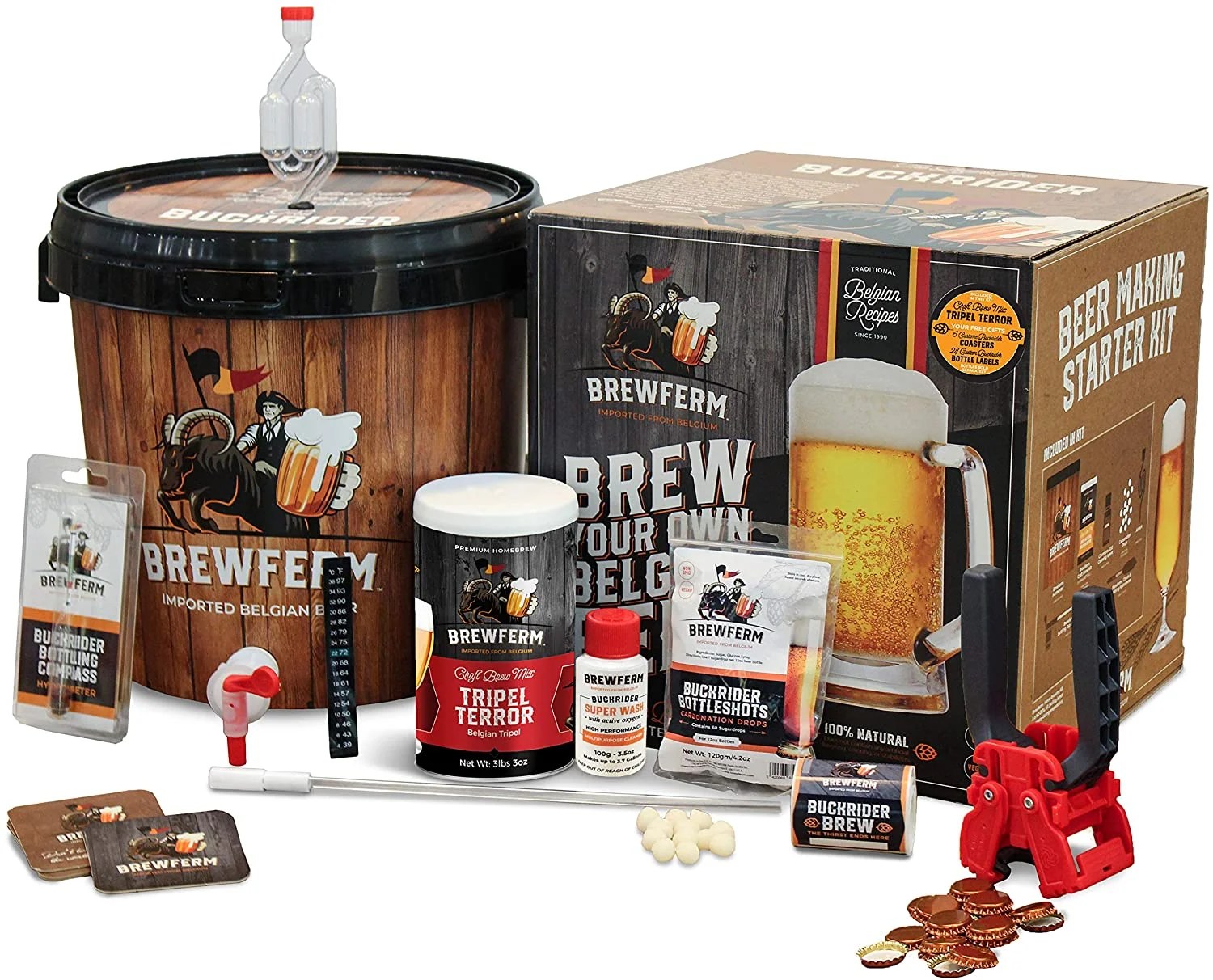
Sterilize the container and all the parts that will come in contact with the beer, mix the ingredients, add water and wait.
Well at least that’s what the brochure says. In fact it’a little more than that.
First, you need a good friend, who has done this before, and has the solution for the temperature. You see, the brewing process really happens at certain temperatures, and that needs to be constant and stable for a few days. When Claire got me the kit in February, it was summer, and we had had a very hot summer. Too hot for brewing. Then time went by and now it’s winter and at night, the temperature drops down to two degrees (we had frost one morning on the windscreen, FROST ! This is as close as I got to seeing snow in years ! Man I was happy. And cold. But mostly happy.)
Anyway, so the temperature at night is too low, and there is no insulation in the house (this is Australia, there’s no such thing as double-glazing, central heating, insulation, … all the wonderful things Europe has to keep a comfy 20 degrees all year round. Here, you freeze in winter and you sweat in summer. Or you turn the air-conditioning on and you blow up your electricity bill.) So, no insulation, and one gas heater for the whole house, no way I can keep a stable brewing environment in these conditions.
But then, Paul, who was visiting us for a couple of weeks, had the brilliant thought : why don’t you use a heater like in an aquarium ? In fact, he was so keen on starting this micro-brewery advenure he bought a heater off eBay and sent it over from New Caledonia. Now, that’s brilliant. He’s brewed stuff before on his boat, and I tasted some of it. I recall a beer, or some sort of fermented stuff he’d done a decade earlier, left in the hull of the boat and completely forgot about it. The result was a black, bitter, think juice, that vaguely tasted like beer and gave you a massive headache the next morning.
So anyways, I got the heater, I had the time, since Claire was at work that week-end, so what the heck, let’s try this thing.
First step, watch a lot of Youtube videos on tips and tricks.
Second step, sterilize your equipment. This is vital as the slightest bacteria might hinder the fermenting process, or kill it all together. In fact it’s pretty simple, just wash with boiling water, a bit of non-scented bleach or any other sterilizing agent and rinse well.
Then you mix the ingredients. So there is a kilo of white powder, which is in fact sugar, or dextrose to be precise. Mix that well with hot water until completely dissolved. Add to that a can of syrupy black stuff, that’s your malt extract (1.5kg of a mixture of barley, hops, and other ingredients. In fact there is a range of different malt extracts to chose from. This kit had a simple lager, but there is English ale, stout, even ginger beer.)
Mix that well, and add water to the mix, until you have 23L. But the critical bit is to have 23L of beer, as this is beer already, that is no colder than 21 degrees, and no hotter than 27 degrees. So you alternate between hot, cold and boiling water to reach the ideal 24-25 degrees.
Last, just sprinkle the little bag of yeast, close the lid, and wait for seven days.
Easy then. Especially when Paul’s little trick helped me keeping the temperature at a perfectly stable 25 degrees, even when the room at night was hardly warmer than 12. Thanks mate.
After seven days, you measure the “alcohol weight” with the adequate hydrometer, for two consecutive days, the “weight” must be identical. Time to bottle.
My advise, rely on your lovely wife to sterilize the 30 bottles while you’re at work, and start the bottling process when you get home after work. Thanks darling 🙂
Now, you have thirty 75cc bottles of beer, which need a second fermentation (thanks to the added sugar which comes in the form of drops, like bonbons), for another week, at a steady 18 degrees. So just turn the heater up, facing the bottles, and leave it running for a whole week.
Today is day five of this second fermentation, in two days, I can store the bottles and forget about them for a month, as the more you leave it fermenting, the better the beer. Or so the Youtube videos said. We’ll see.
Of course, we’ll open (at least) ONE bottle on Wednesday when Claire gets back from the mine, no way we can simply watch these bottles and not taste it. Especially since I vowed not to drink a drop of alcohol for the week. I became too eager to simply open a can or pour a gin-n-tonic after work, a dry week will do me good.
Oooh exciting times !!
PS : for those of you eager to try this at home, just order your kit from the web.
 RSS - Posts
You must be logged in to post a comment.