

First Khmer week.
9 October 2012
September 30th – October 9th
The Cambodian border lies some 80km south of Surin, and we chose the border town of O Smach. It’s a small village, with offers nothing but the immigration and custom offices, and two casinos, where dozens of Thai come in every day. They cross the border for just the day, spend and lose their money, then go home and drink what’s left.
An elegant gentleman comes forward and offers to help us through the crossing procedure, which takes about an hour, but after getting the last stamp on our passport, he of course asked for money. Sorry pal, I gave my last Thai baths at the immigration. Find somebody else to scam, I’ve already paid my visa ten dollars more than I should, as the immigration officer refused we paid 20USD and asked for 1000THB, which equals to 50USD for the both of us. Bastard!
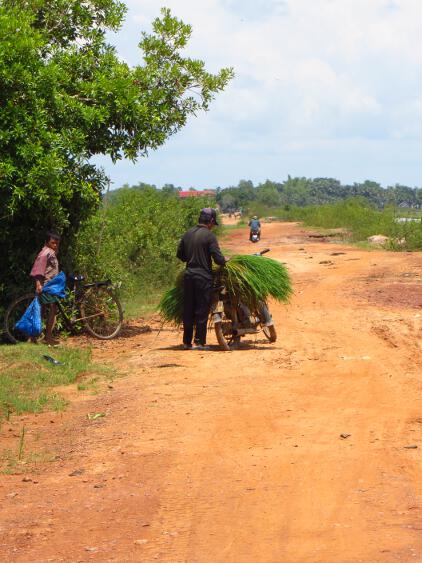
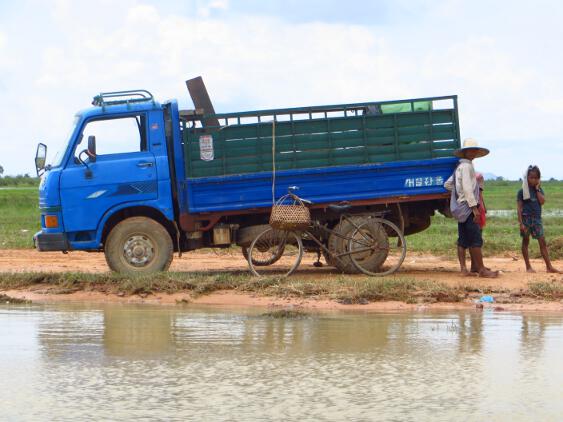
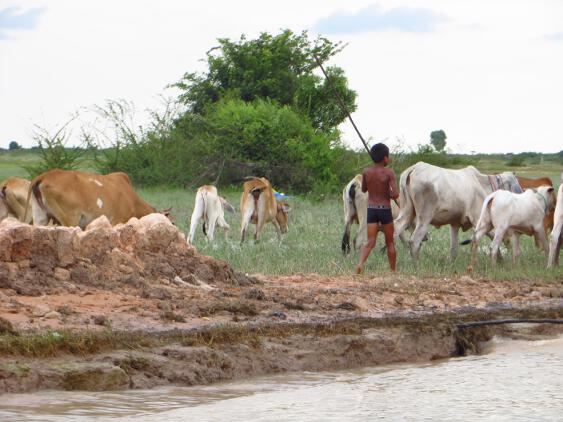
On the other side of the border, it’s another world. The roads are in a poor condition, when there are roads at all. Cambodian people drive like maniacs, with or without a licence, added to that the road conditions and I now have to drive on the wrong side of the road, imagine how easy it is to overtake a truck or a bus. When driving, you cannot relax, you have to swerve constantly between the people on foot, on bicycle or on motorbike, the cows, the dogs or the chicken, and the hybrid vehicle carrying tens of children, bags of rice, manure or fresh bamboo, pulled by either bulls, the front of a truck without doors or a bonnet or simply a motorbike. Daunting.
Bushcamping is going to be an issue here, for two reasons. One, the monsoon has over flooded pretty much anything that isn’t four foot off the ground, so there is no way to pitch the tent just about anywhere you like, unless you want to swim in your sleeping bag. Second, Cambodia is the second most mined country in the world, after Lao. I’m not talking about mining in the Australian or Caledonian sense, there is no nickel or ore here, I’m talking about explosive devices, which were dropped over three decades of war and civil war. Its population is about 15 million, with 40.000 amputees. The stats gave about 800 casualties per year up to 2005; it has dropped to 200 today. (Read Wikipedia for more gruesome statistics).
So basically, the word is: do not, under any circumstances, wander off the beaten paths or you will lose either a leg, or your head. It also makes the “pull over I have to pee” experience a very unnerving one. Either pee on the very side of the road, for everyone to see, or hold it in.
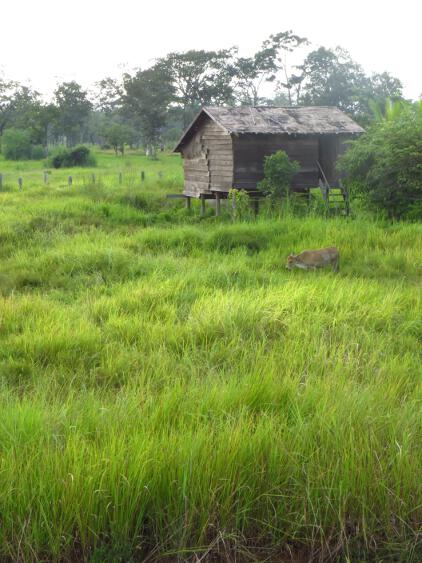
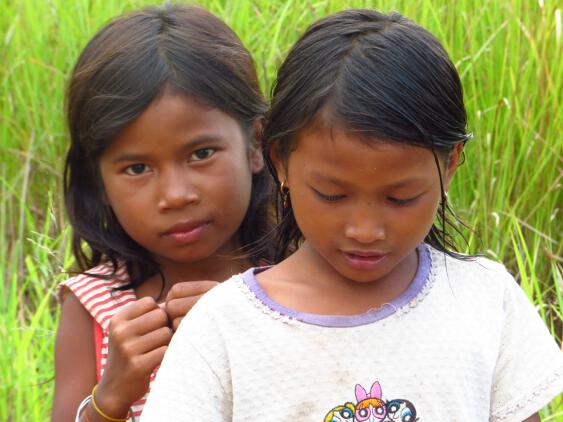
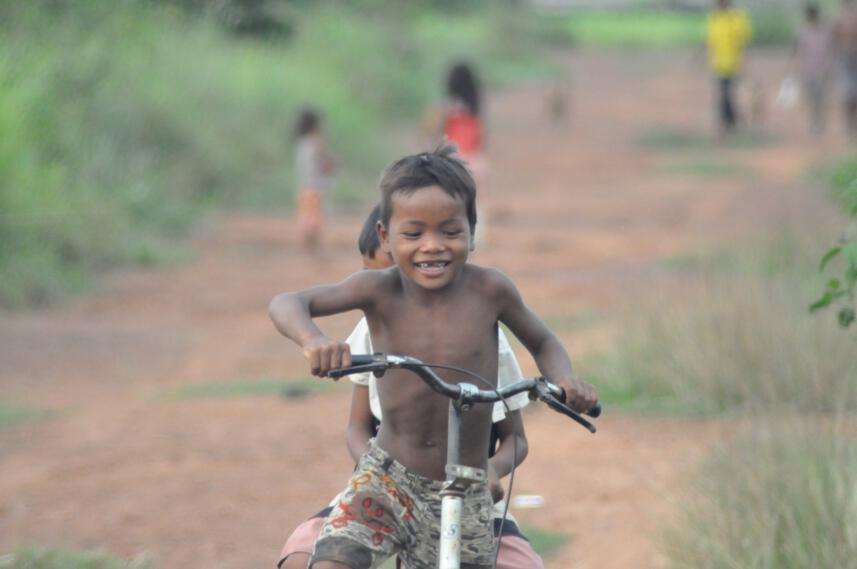
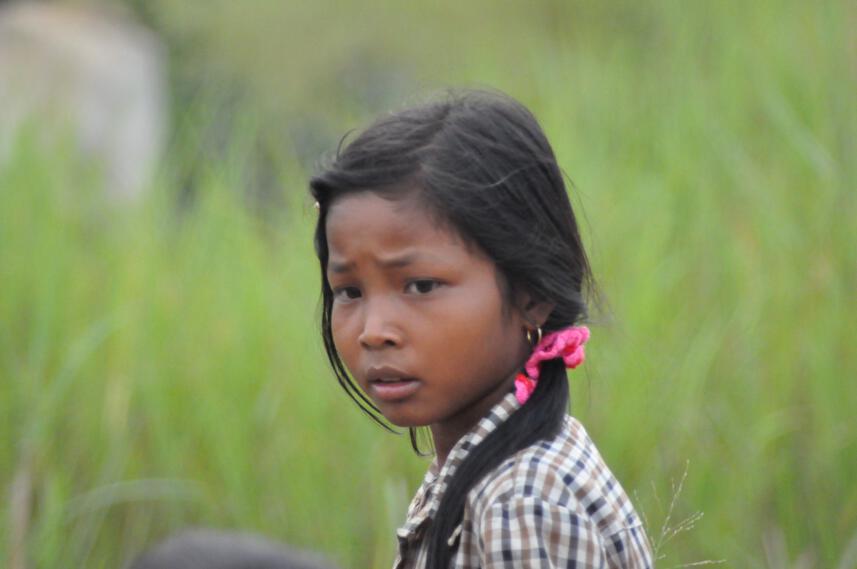
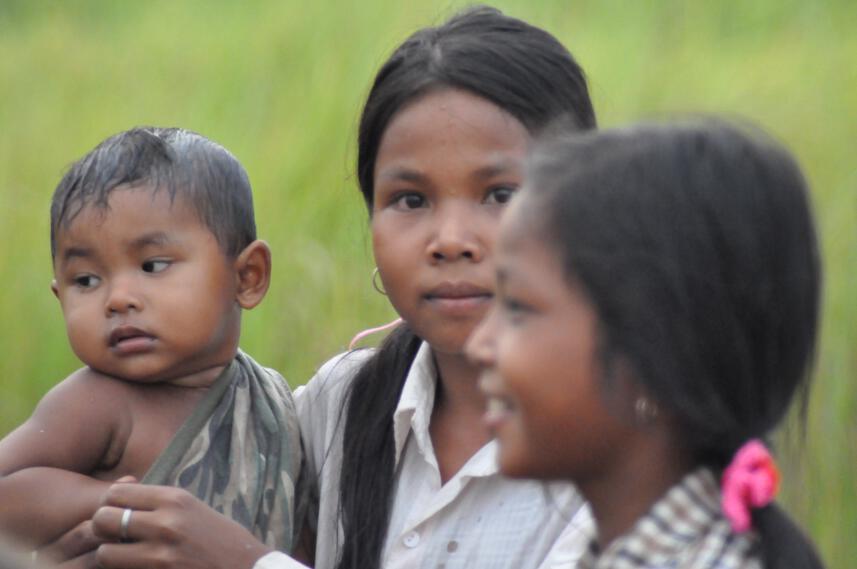
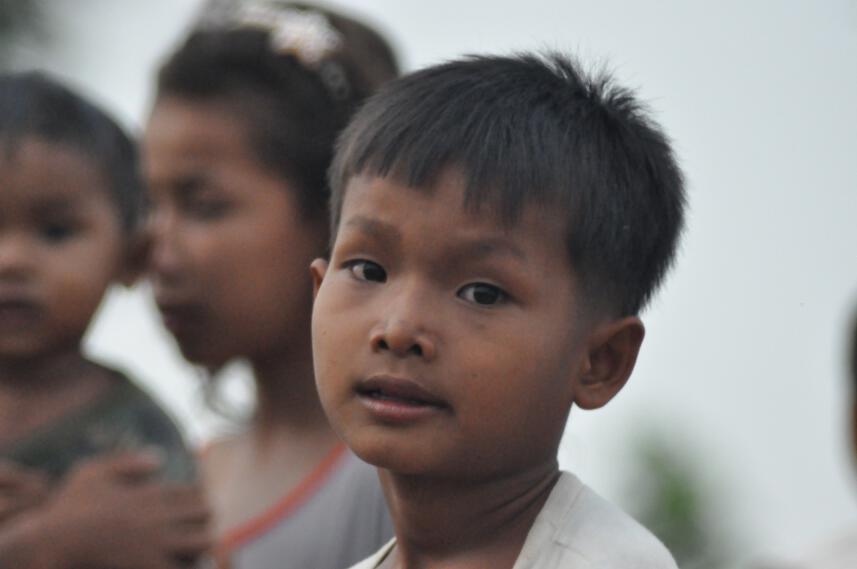
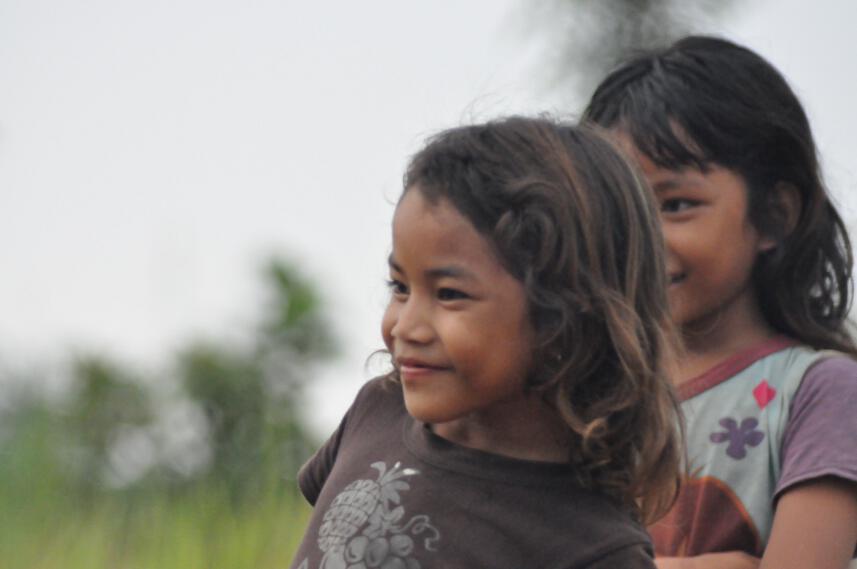
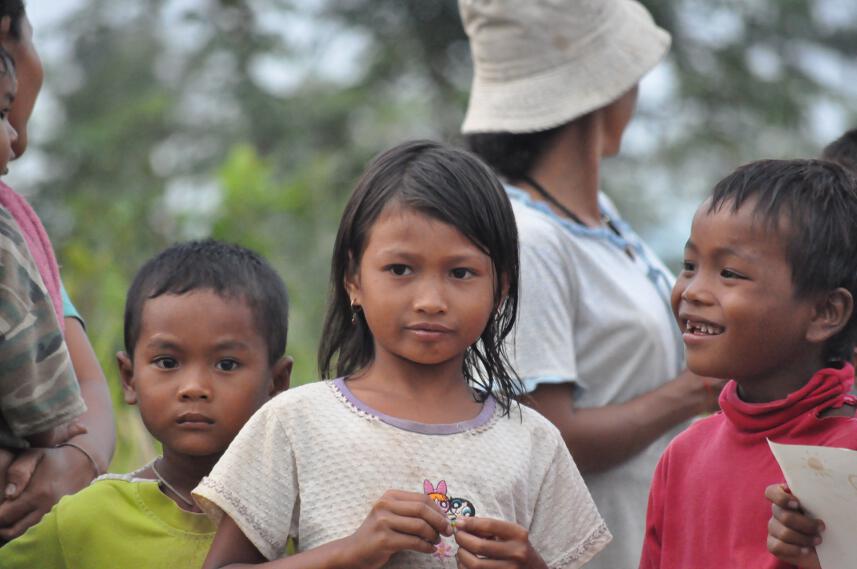
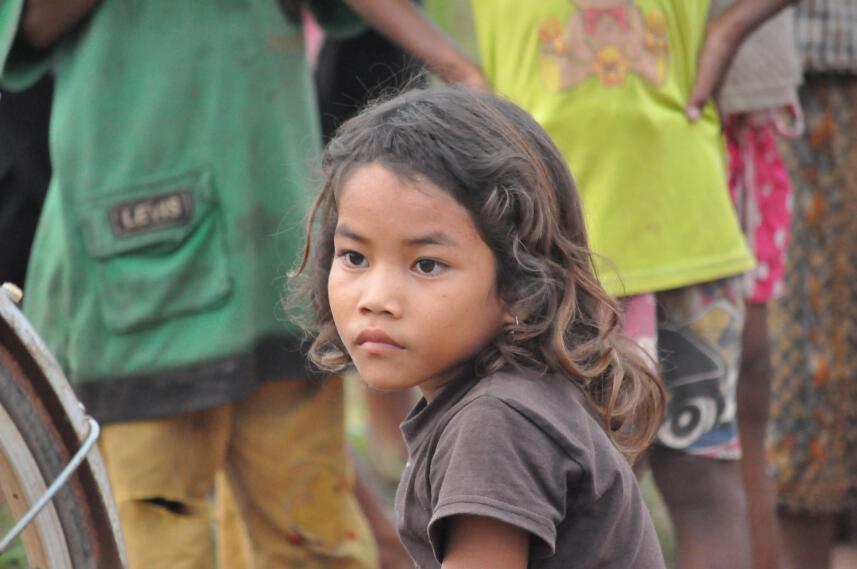
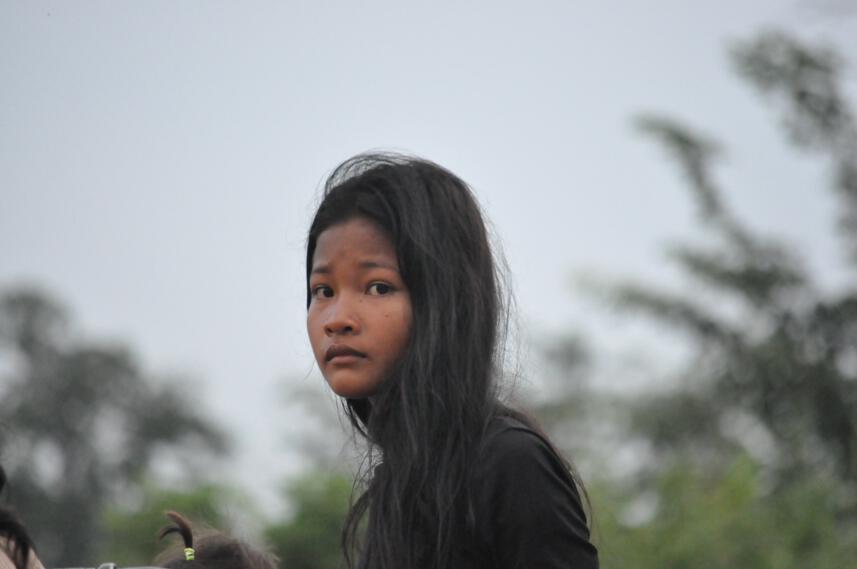
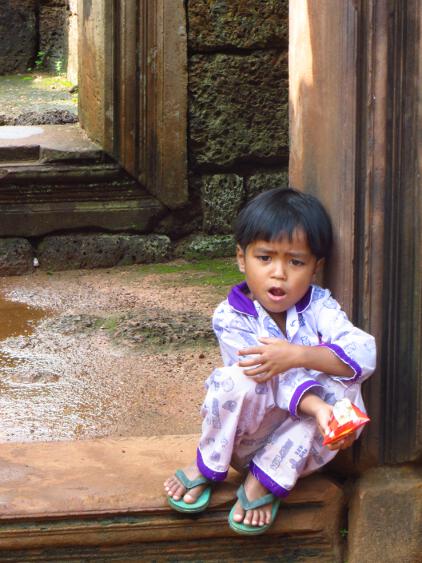
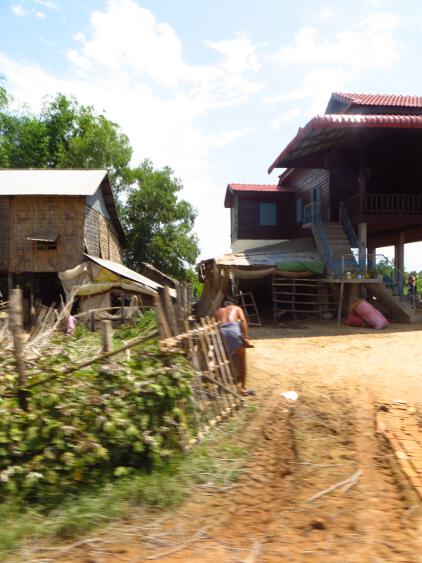
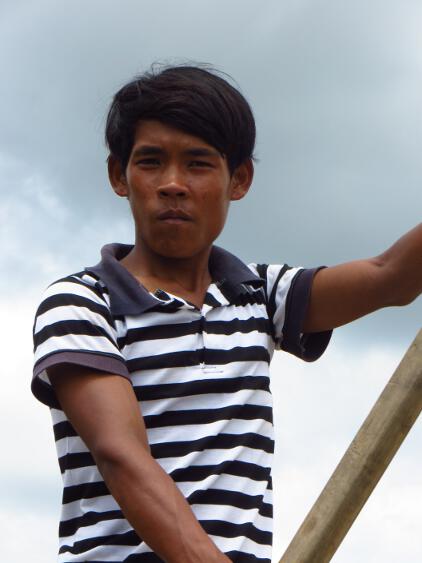
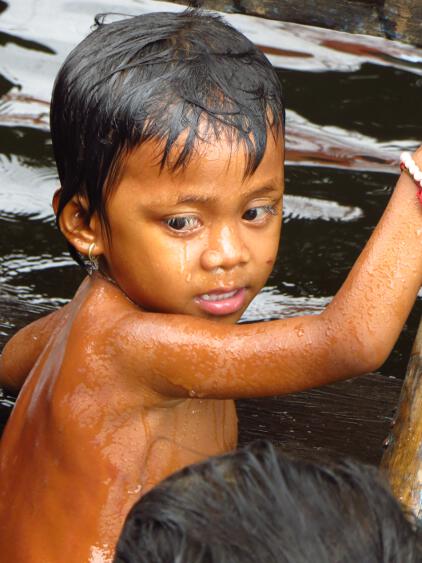
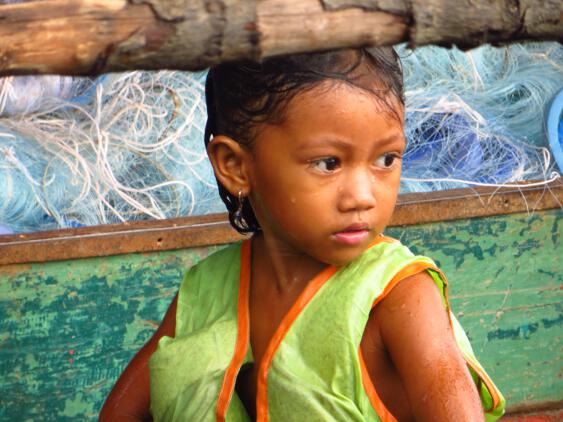
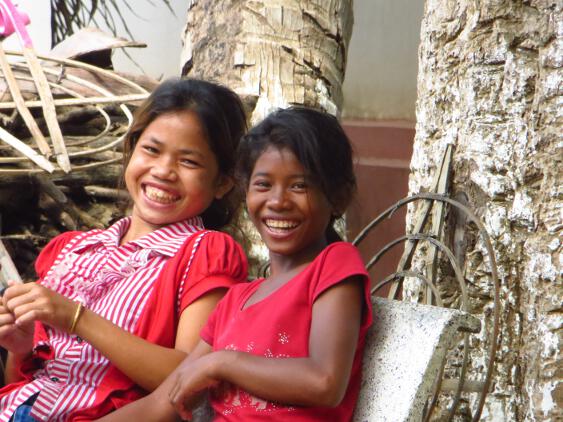
We asked a local villager if we could pitch our tent on the side of the road, next to his small house, and set up for camp. After ten minutes, the whole village was there to watch us deploy our fabric house and connect the gas stove, but this gave us the opportunity to take amazing pictures of the kids, and in return they taught us a few Khmer words such as hello and thank you.
A while later, we were alone, they’d all gone back home, and we could enjoy our nice bottle of wine we bought in Thailand last week. There is nothing better than a glass of crispy cold white wine, watching the sun go down on the rice field. Especially when you haven’t had wine for more than three months. Come to think of it, my last glass of wine must have been in Darwin with Thor and Bridget. I don’t care this Thai wine was overpriced and a bit too sweet, it’s bloody good.
Shortly after dinner, two policemen, drunk, came by and politely told us in approximate English we should move our tent to the Police Station where we’d be safer. It took an hour of pleading and convincing and denying we understood what he said, for them to finally give up and let us sleep. Drunk as he was, the cop wasn’t very happy about it but he eventually went away. Only to come back a couple of hours later, even drunker, to wake us up and proudly announce he’d be spending the night in the shed nearby, for protection he said. Suit yourself mate, and thanks. No I’m going back to bed.
Five AM, he obviously sobered up, so he carefully woke us up again, and shouted he was leaving. Thank you, let me sleep for f** sake.
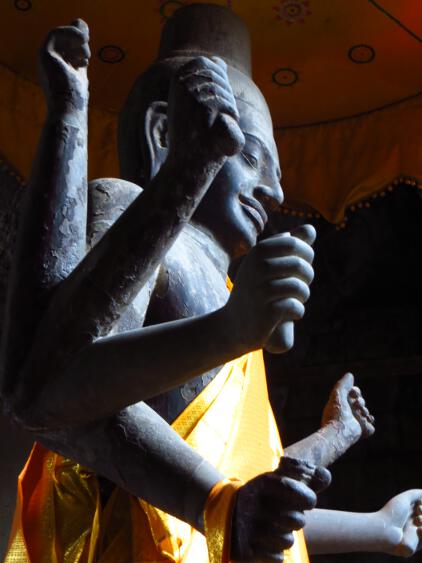
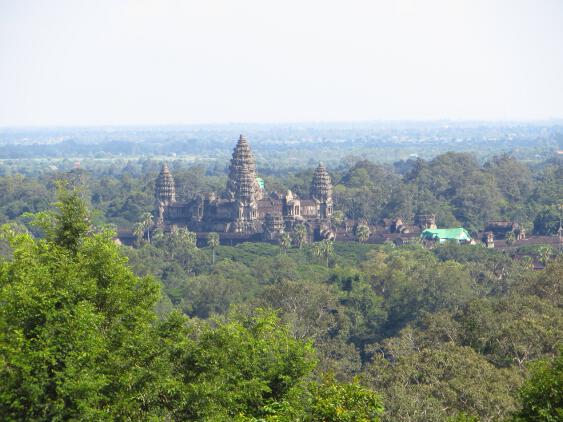
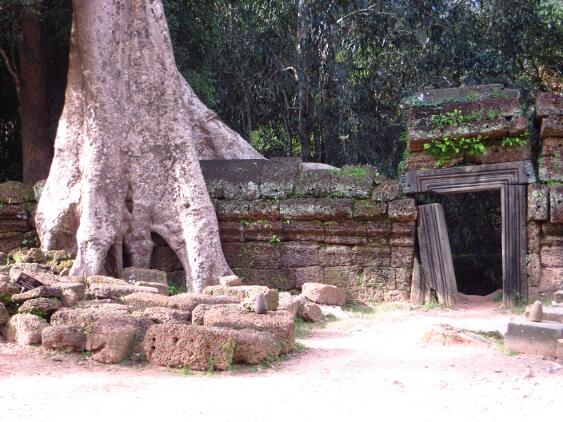
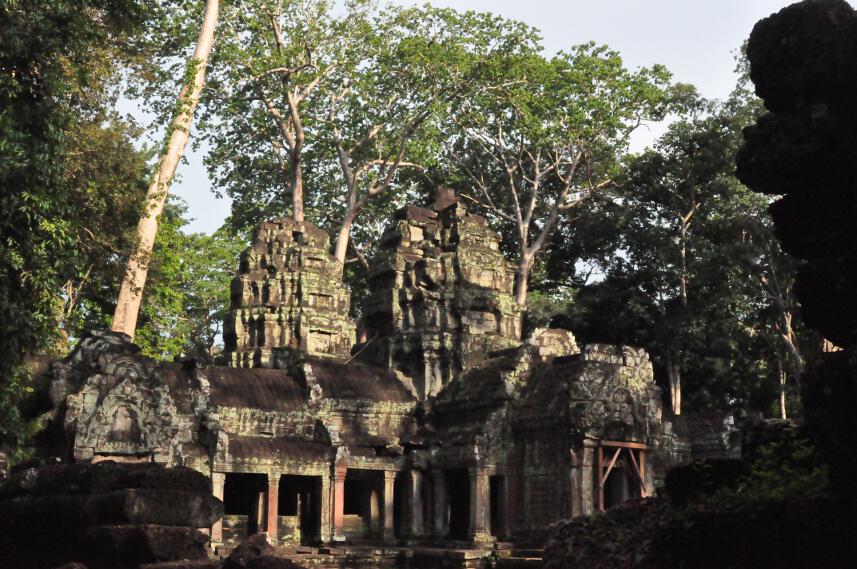
One hundred kilometres South, lies the most famous city in Cambodia, and possibly in the world : Angkor. It was built between the eighth and twelfth century. At the time the Khmer Empire (part of Laos, Thailand, Vietnam, Burma, Cambodia and Malaysia) ruled from Angkor, until the capital of this part of the world was moved to Ayutthaya in early 1400.
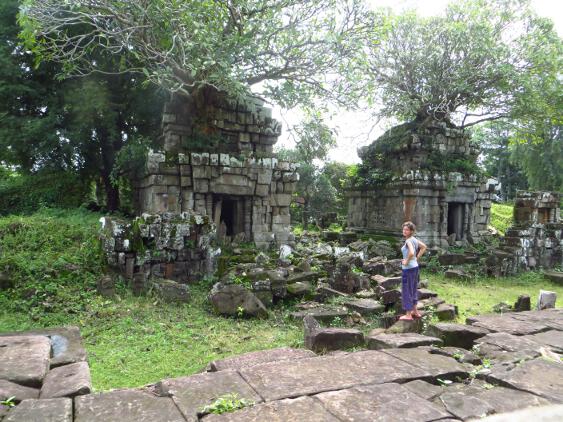
It is hard to imagine yet comprehend the size of this ancient city. The thirty or so remaining building spread across an area of 3000 square km (there were over a thousand building at the time, all connected by roads, sewage system, etc. The closest competitor to the largest preindustrial city (I’m just quoting Wikipedia here) is Tikal, the Mayan city in Guatemala, and is only an eighth of Angkor’s size.
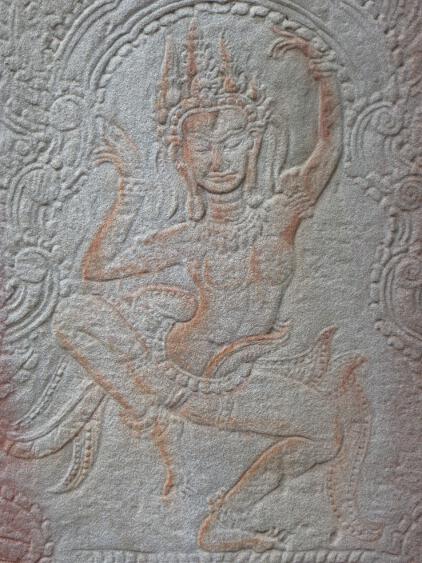
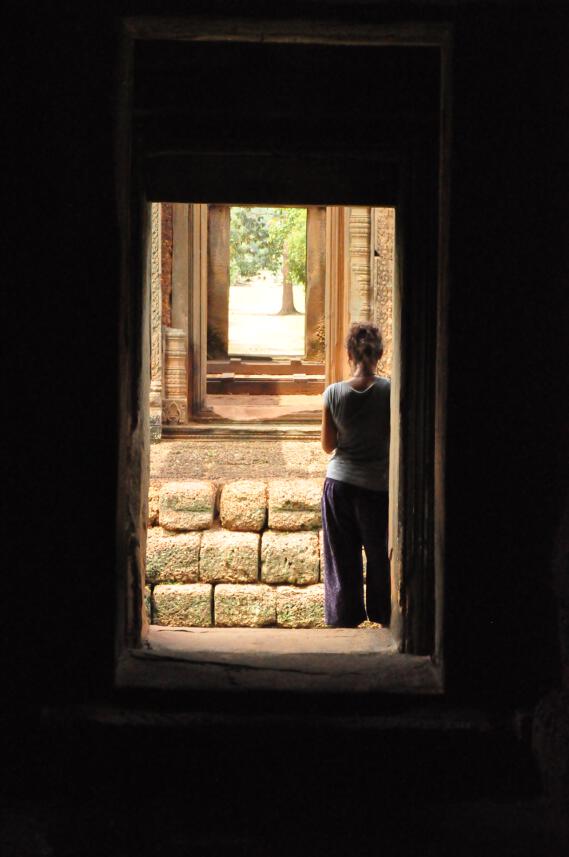
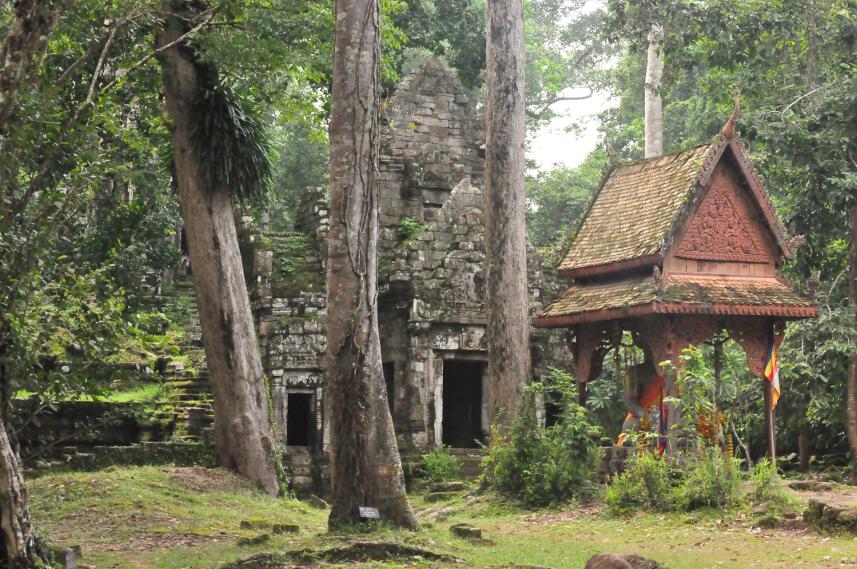
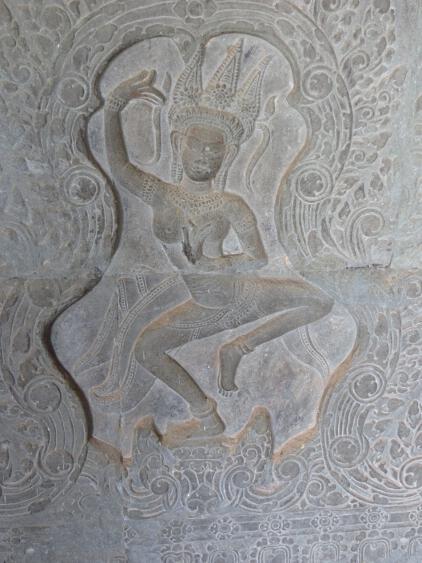
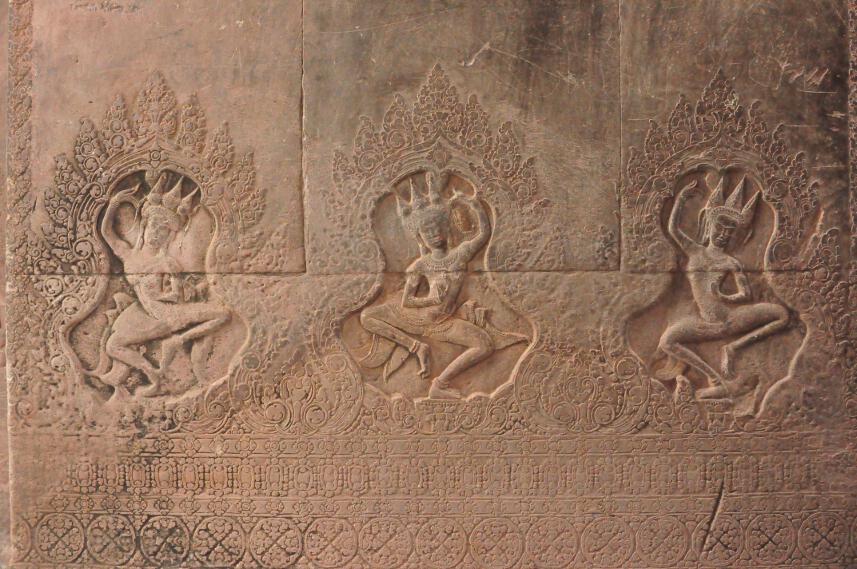
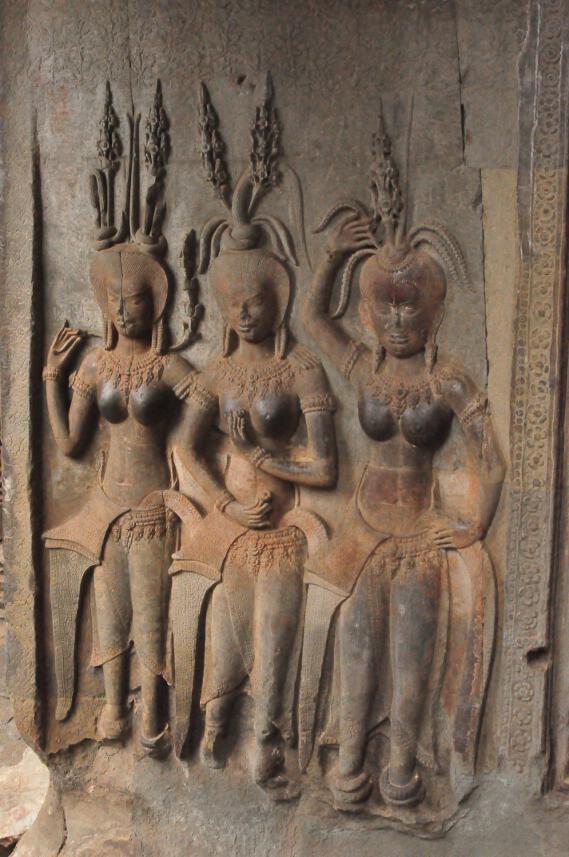
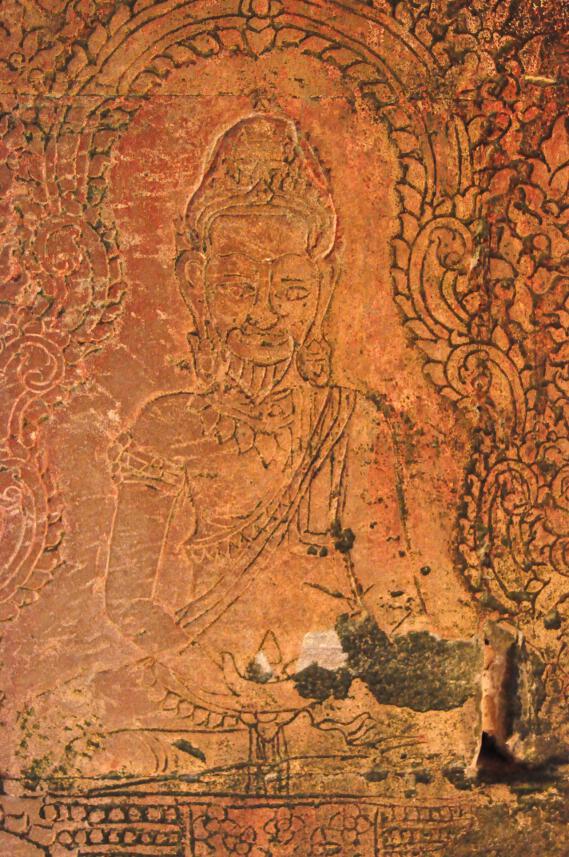
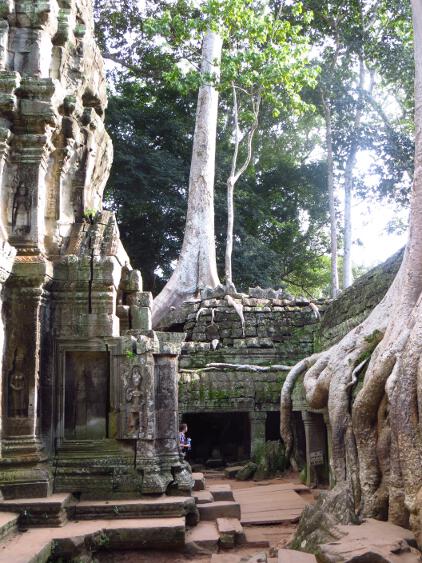
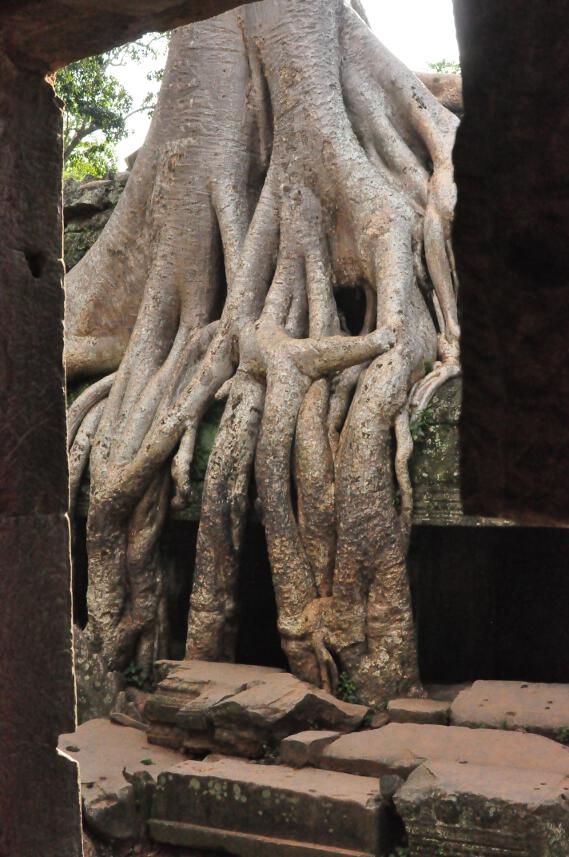
These temples are as tall as a four story high building and sometime more than a hundred metres wide. It’s just staggering. The eerie feeling you get when you walk into one of these temples, now in ruins for most part, is just breathtaking. I can’t quite describe how much detail there is in each carving, when some of these carving are just six inches tall and part of a three hundred metres long tableau, with thousands of characters depicting the story of a battle for instance. I’ve never seen anything quite like this; even Borobudur in Jawa is pale in comparison.
We spent four days in Siem Reap, the modern town next to Angkor. The first day when we arrived we just booked in a lovely guesthouse, run by two French women. Cambodia used to be called Indochina under French protectorate and there are a lot of French heritage still remaining in the country. Bakeries, pate, cheese, yoghurt, wine, French speaking people, it’s all there. Siem Reap is, sadly, very very touristic. You cannot walk three metres without a person asking “Hello Sir, hello Lady. Buy somsin? Would you like a t-sirt ? Would you like a tuktuk?”. There are so many Caucasian tourists that one street has been renamed “Pub Street”. This give you an idea.
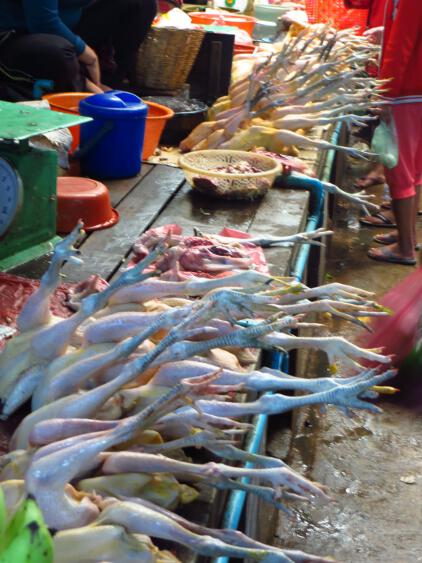
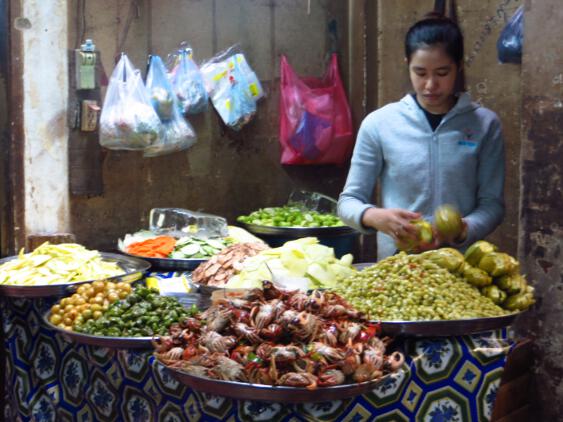
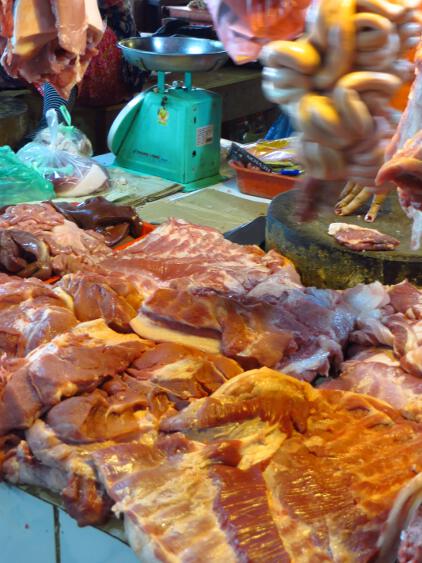
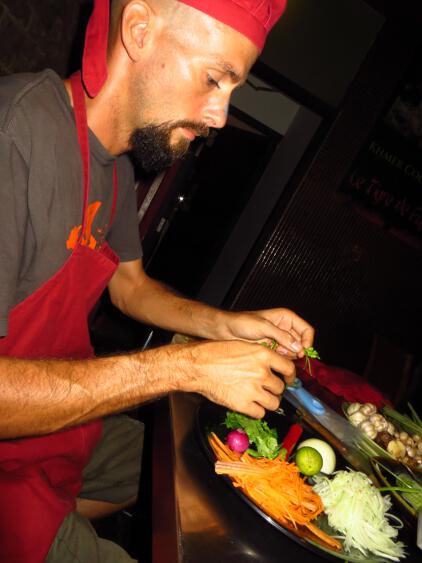
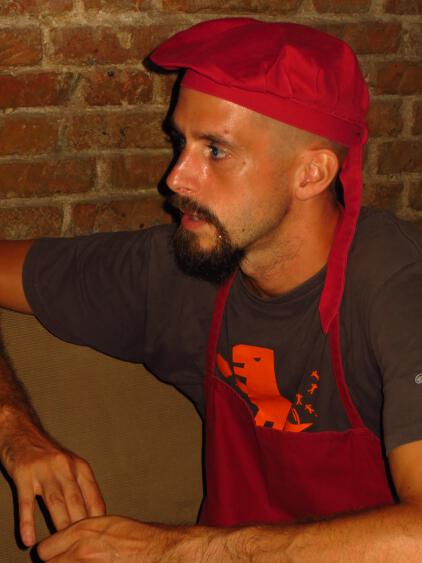
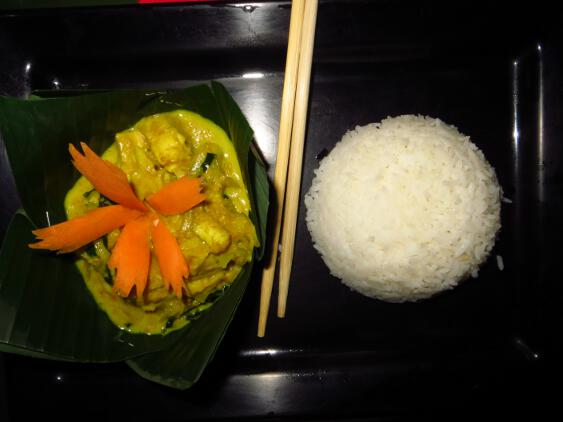
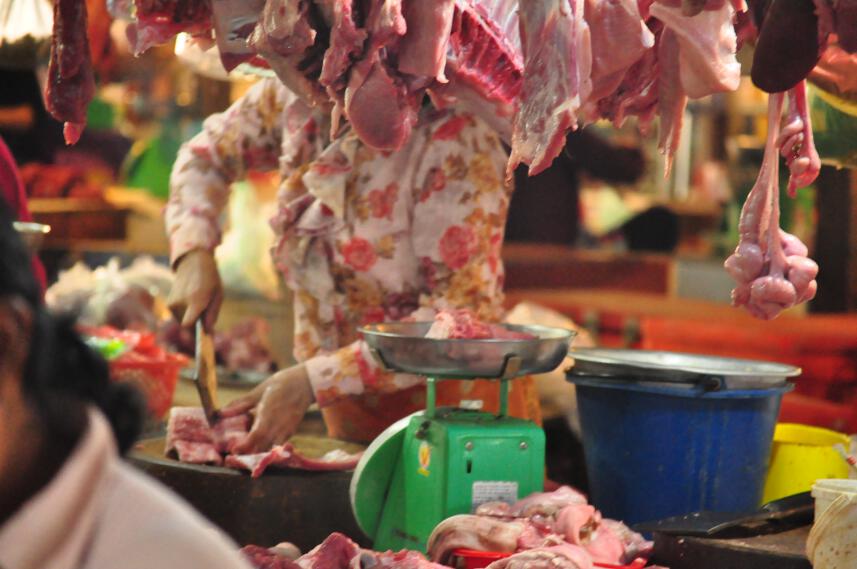
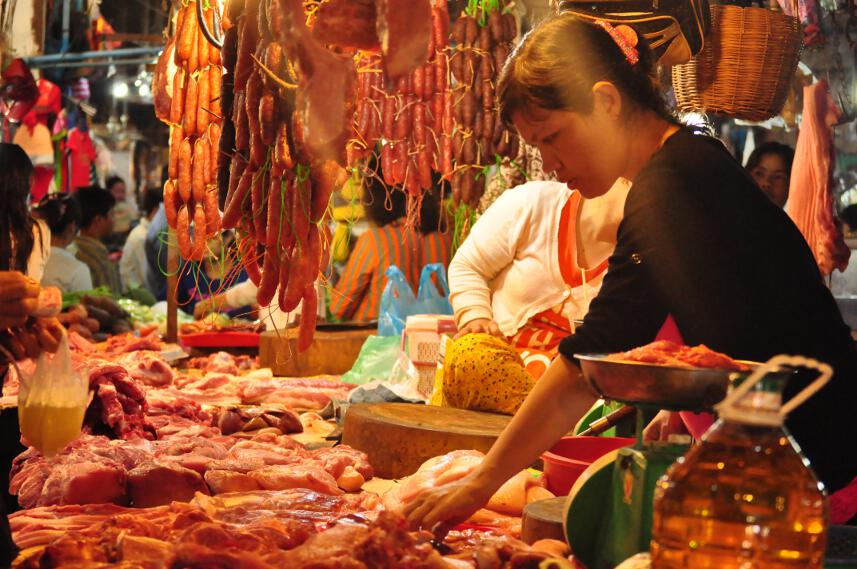
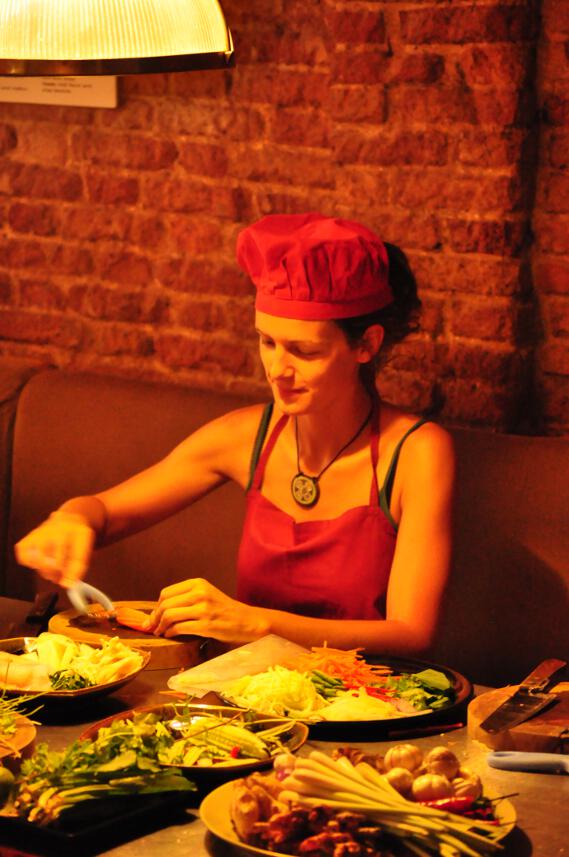
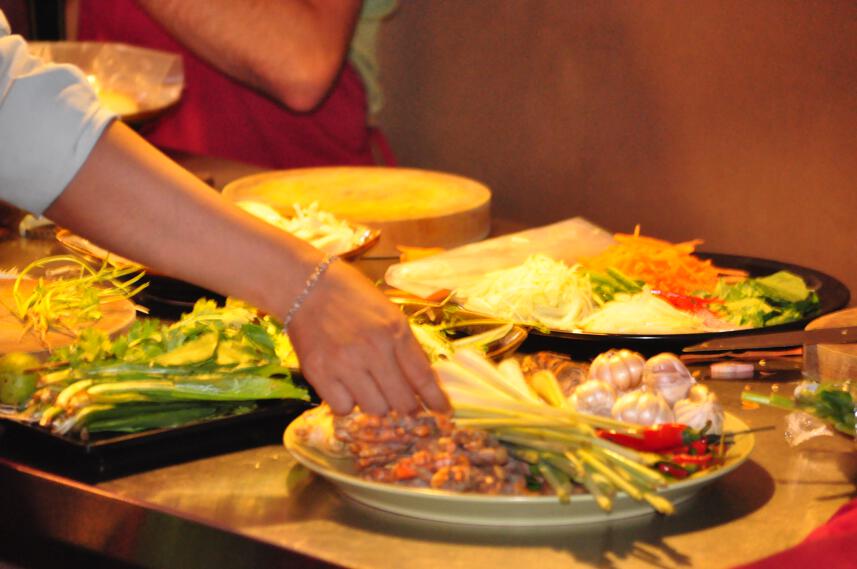
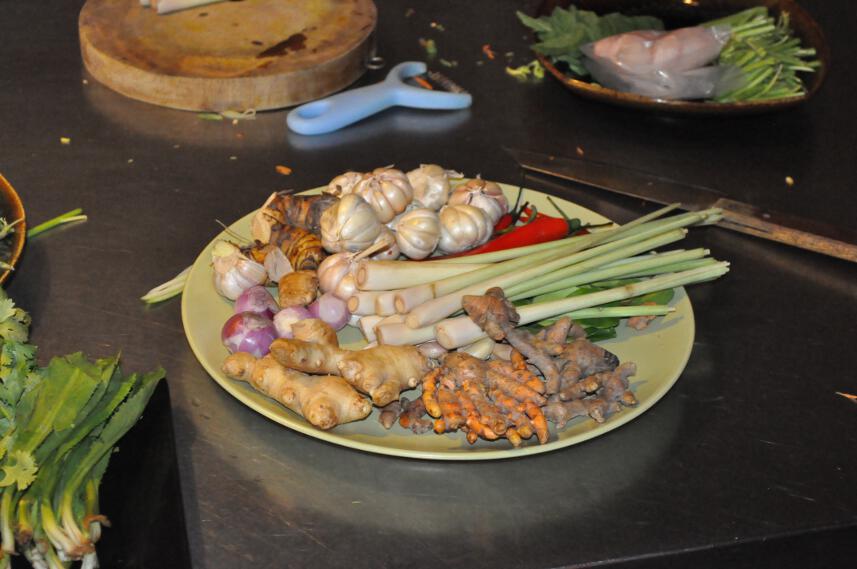
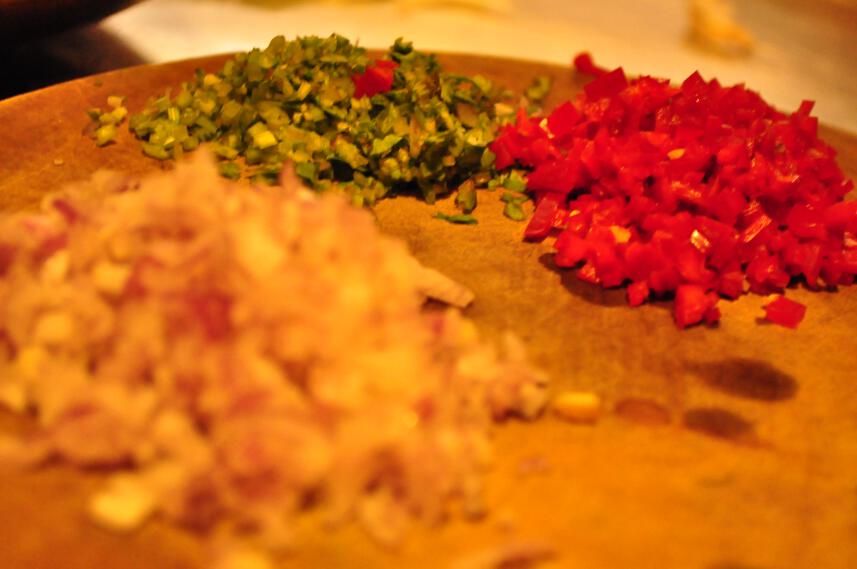
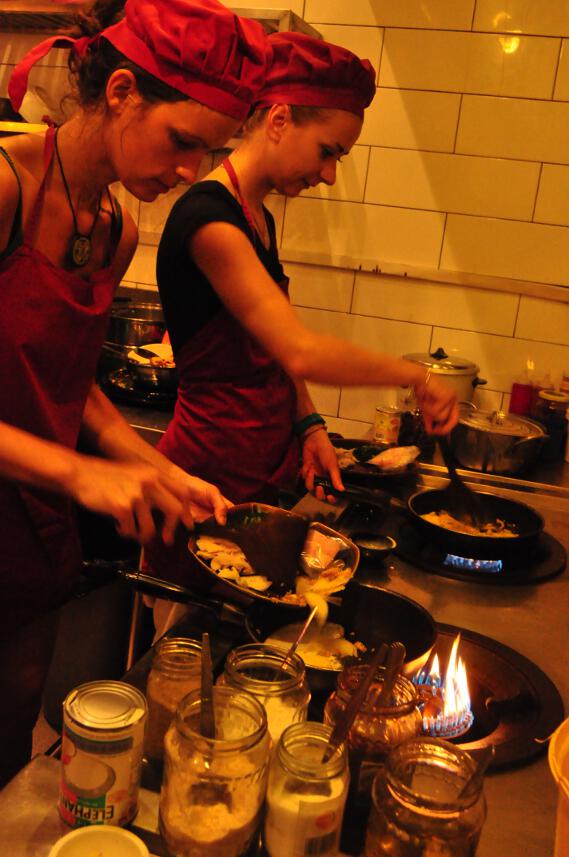
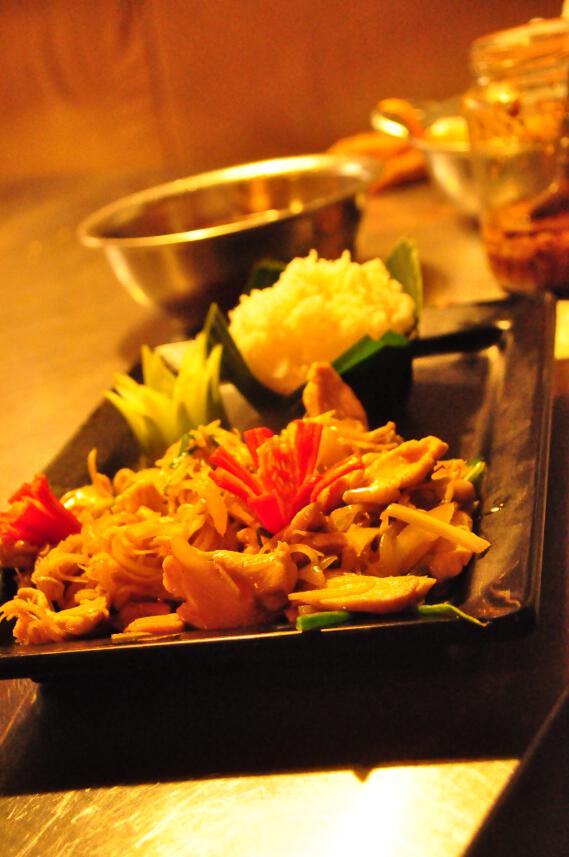
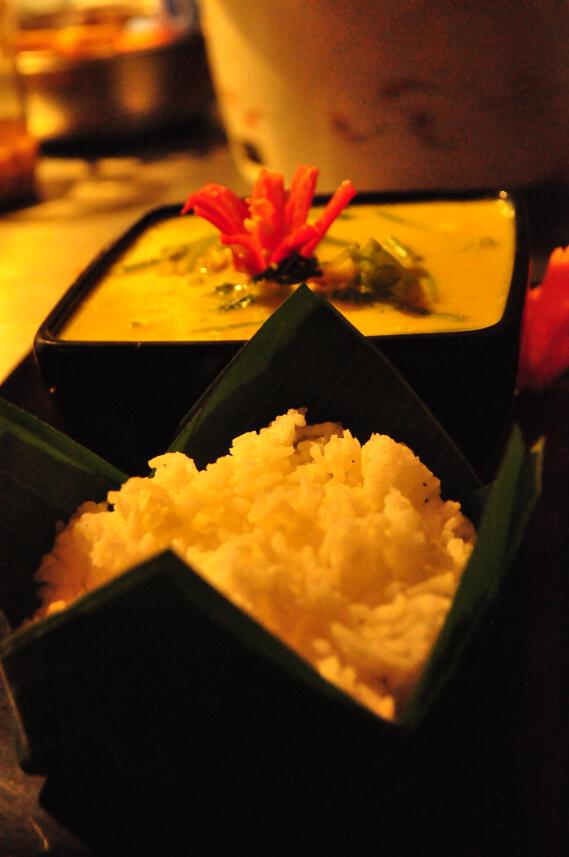
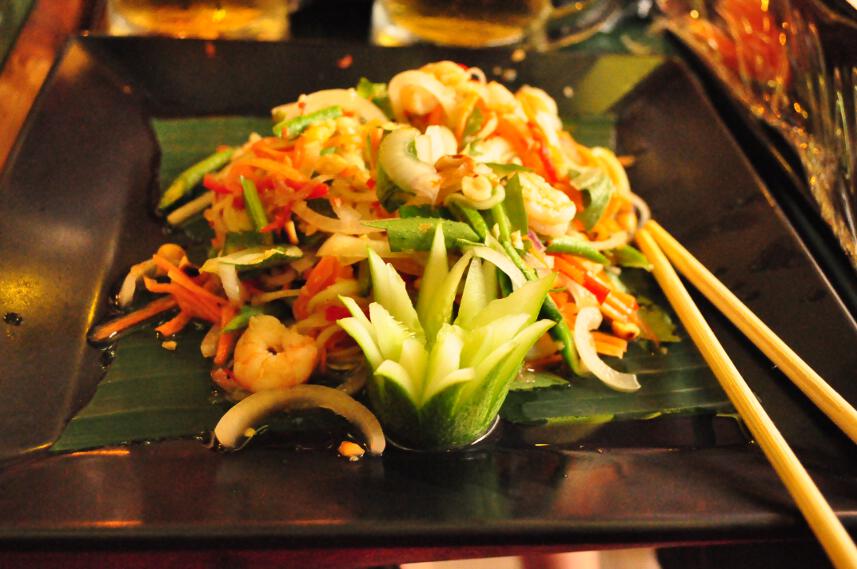
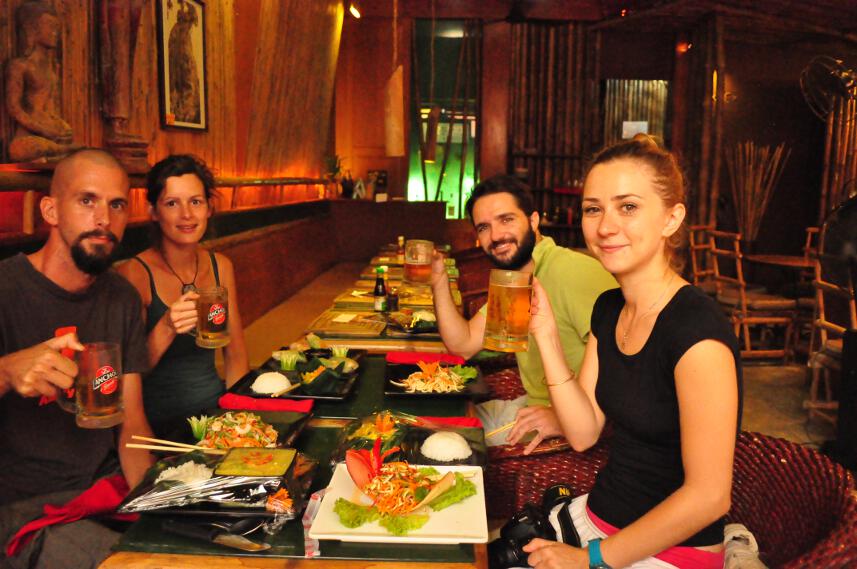
There is however, with the French influence, a few good restaurants, one of which offers cooking lessons for just fifteen dollars. This includes a visit to the market, the selection of the ingredients for the dish you have chosen to cook, the preparation and cooking itself plus of course, eating it all. I chose a spicy shrimp salad, followed by a curry soup, while Julie chose fresh spring rolls for starters followed by an amok fish. Both amok and ….. are Cambodian specialties. We were accompanied by a French couple, on a long WE break from their Shanghai busy life. Three hours later we enjoyed our lunch, full of pride with our delicious creations.
The next day we started our three days visit to Angkor, starting with the farthest of all, Bantey Srei. We were hoping by starting early in the morning we’d avoid the hordes of loud (very loud) Chinese and Vietnamese tourist. They come by bus, three or four of these busses, vomiting hundreds of people at once, all running and pushing and shoving you to be the first to have their picture taken in front of this statue, or that bas-relief, all the while shouting at each other, or making loud revolting noise clearing their throat and spitting the result in a green slimy blob on the ground. Even the women spit.
But the good thing about having your own car is that you can beat the tourist groups by entering a temple by the least busy door, carry your own cold drinks and lunch in the fridge, not to mention drive to places most people don’t get to see. Including get up close and personal with the temple where Lady Croft recovered the missing diamond for her quest to destroy the Illuminati’s (this will sound familiar to only a few of you…).
On our third day of Angkor, we had breakfast in the forest. Let me quickly explain: a breakfast in a guesthouse costs about five dollars for the two of us, when we can just as easily drive to wherever location we chose, pull up the folding table and chairs, brew a nice pot of tea or coffee and enjoy our very own choice of yoghurt, muesli, fresh fruit, bread (baguette in this case since Siem Reap has a French bakery), porridge or even pancakes if we feel like to. So, as I said, we were enjoying baguette, blueberry jam and black coffee (green tea for Julie) when a local villager (there are dozens of villages spread across the ancient city of Angkor, I wonder if they realise they live within the largest historical site in the world) drove by on her motorbike and kindly invited us to come by that night to share a few drinks with her. We accepted of course and later that day we enjoyed Lorn’s company, with the couple of fried fishes she’d cook for us. Three beers later she was drunk enough to admit at 28 she was stuck with two kids and an unloving husband, when she was dreaming of traveling or simply a little love from her partner. There we were, Julie and her, two women with the same age, but so completely different lives. How many women got married too early or for the wrong reasons, stuck at home when all they’d ever wanted was an education and see the world.
October 5th
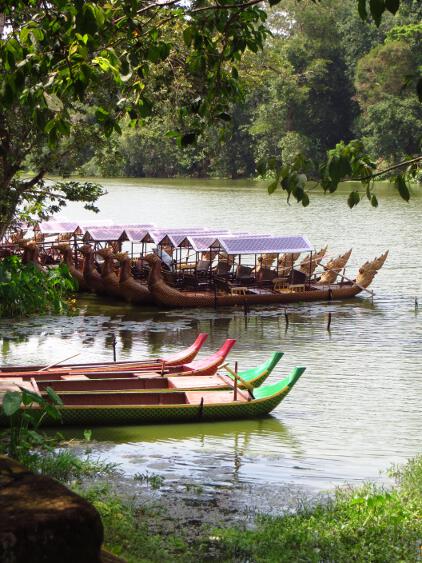
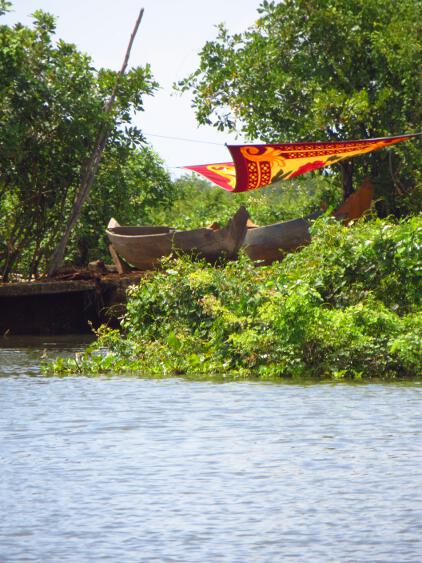
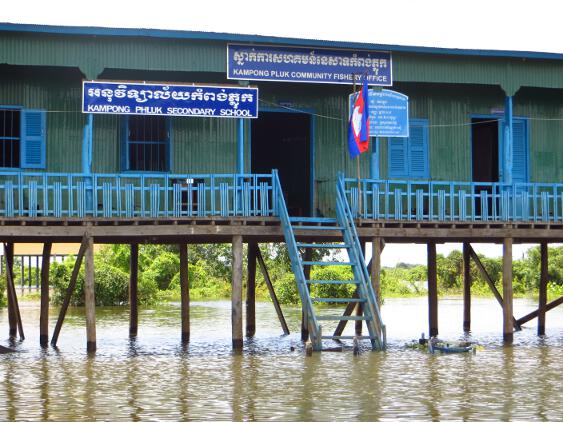
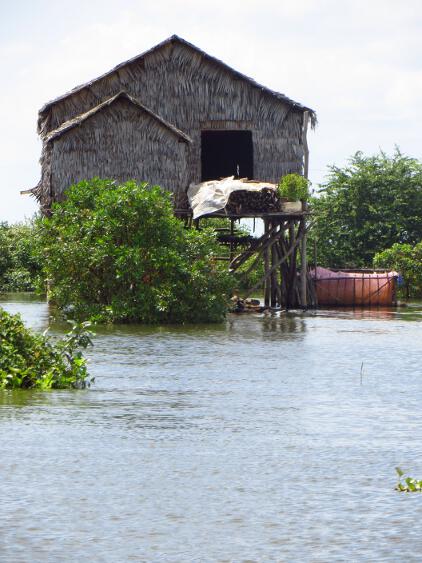
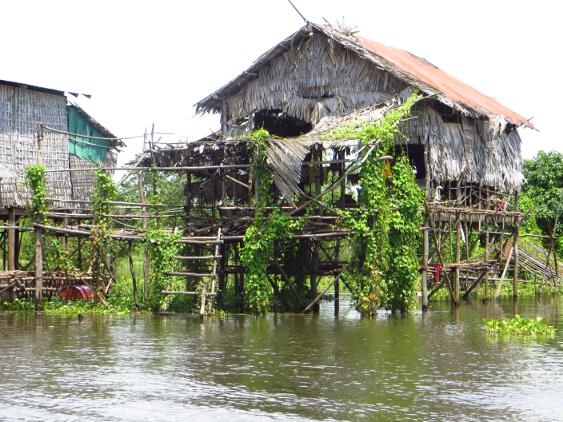
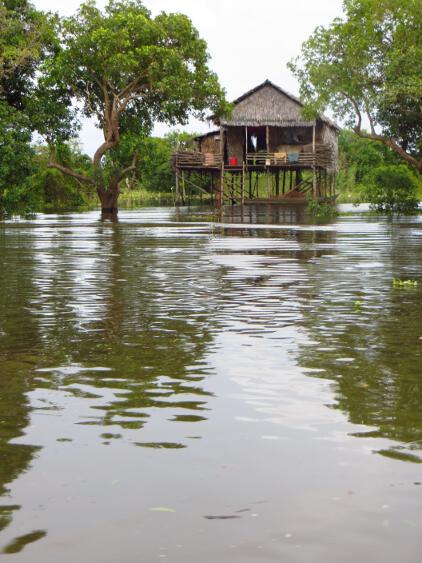
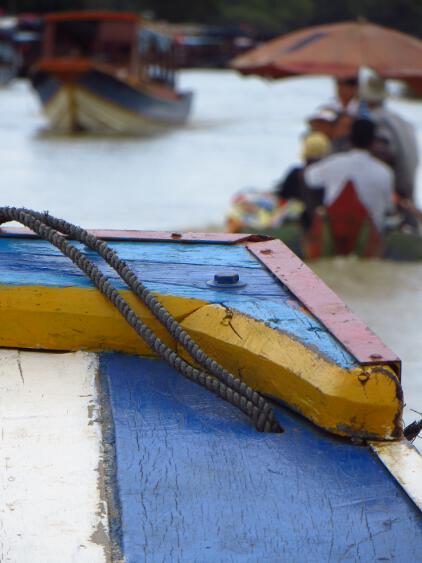
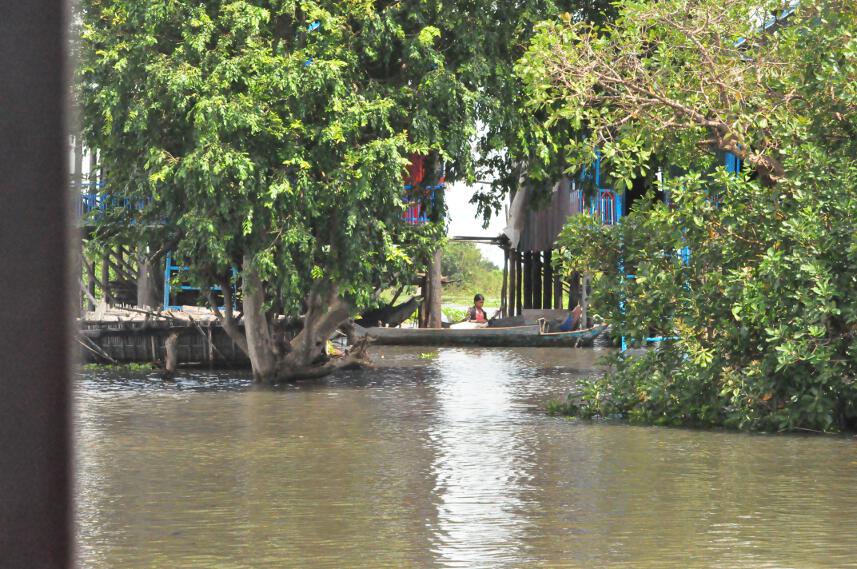
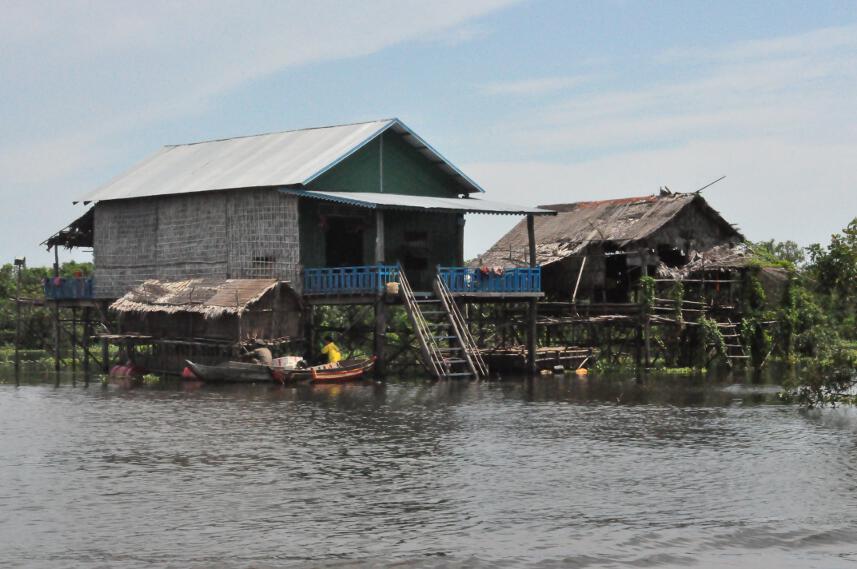
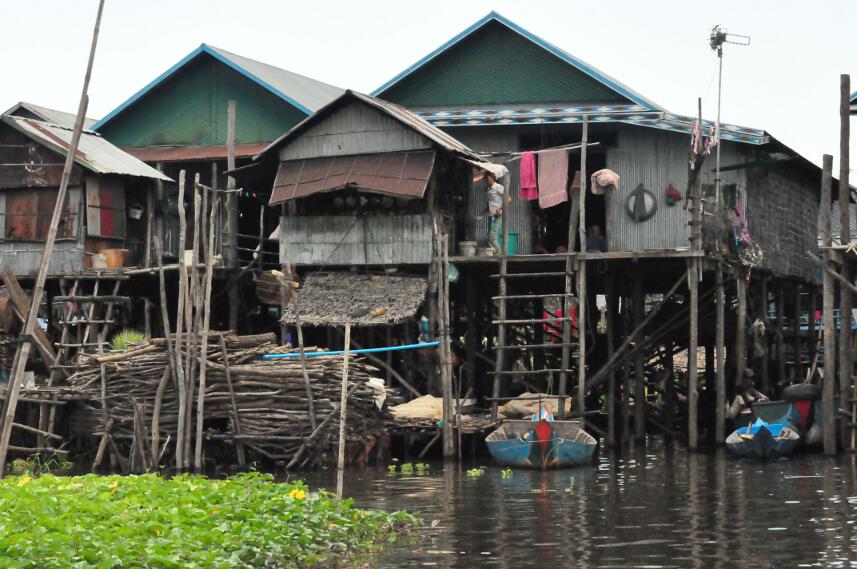
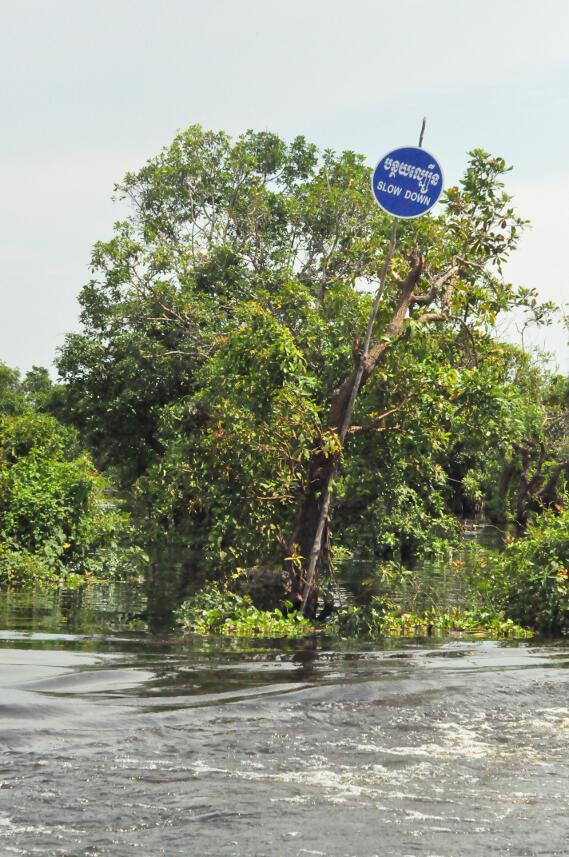
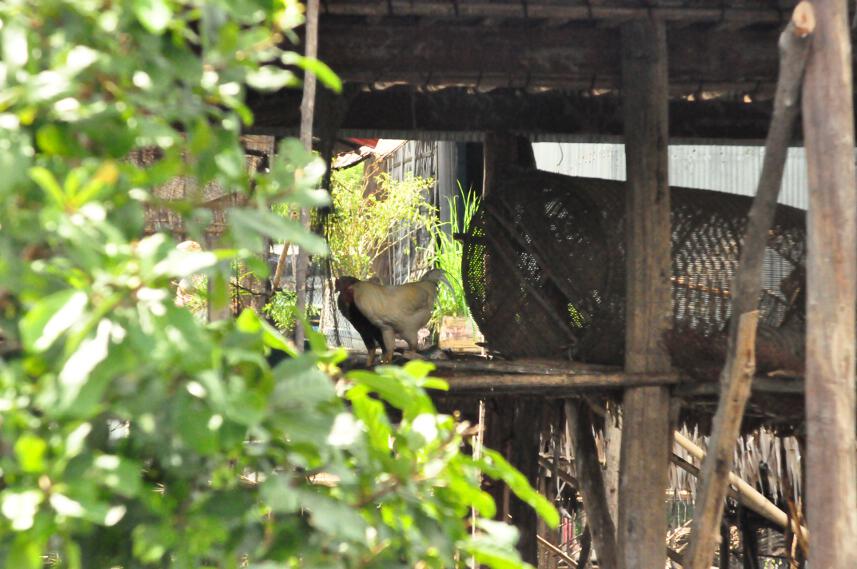
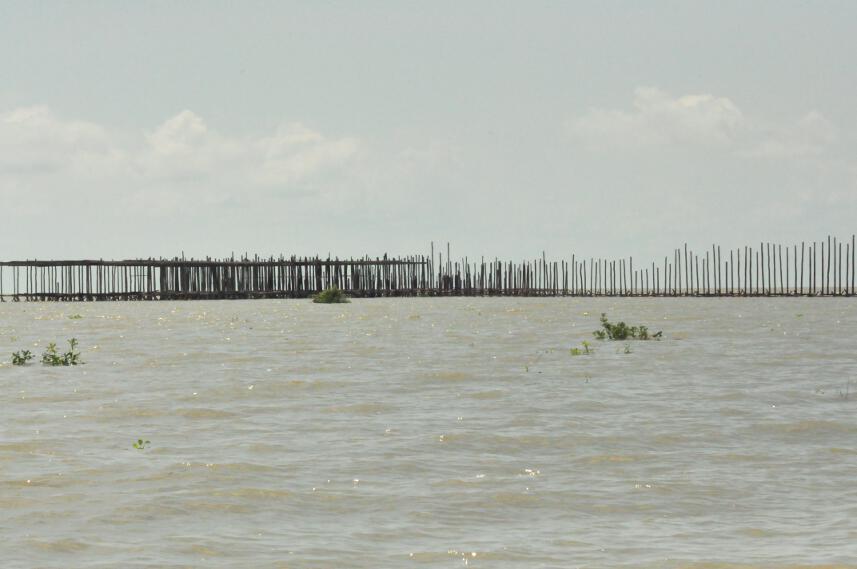
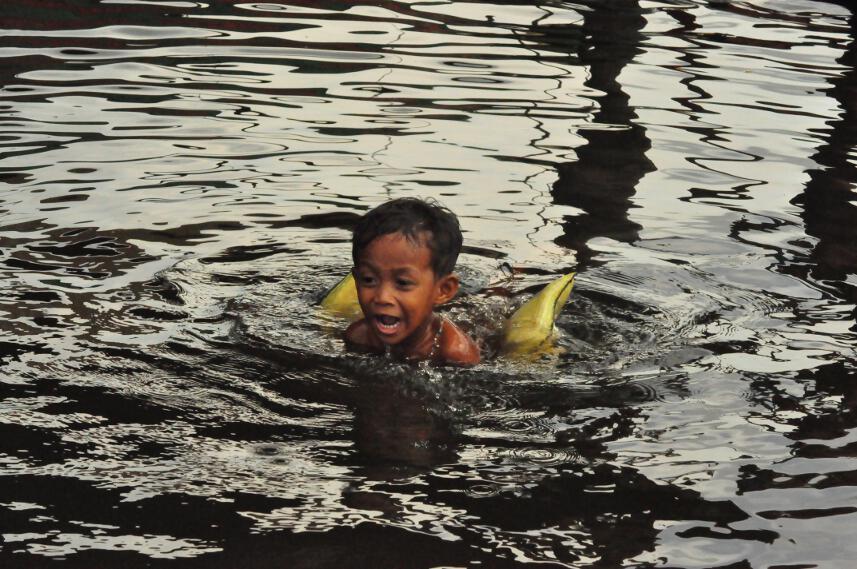
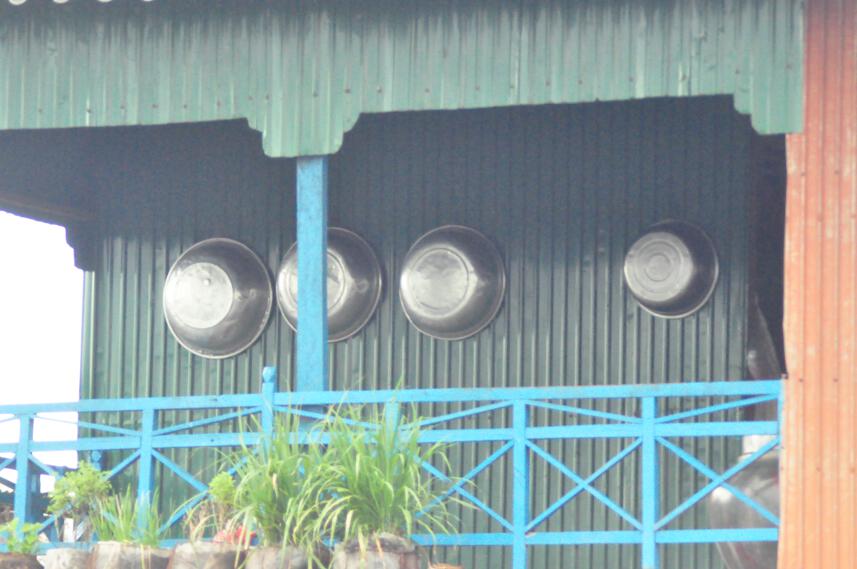
We left Siem Reap and drove to Tonle Sap (Great Lake) to visit the floating village of Kampong Khluk. The road is in poor condition until it stops entirely and you have to continue the journey across the lake by boat. The visit takes you right into the streets of the little fishing town, passing beautiful houses on pillars four to five metres above the water. The villagers keep their feet dry while moving around on long and narrow boats. We did wonder if we weren’t perving a bit at these people, when we sailed around in our loud and smoking boat, taking pictures from their everyday lives. But the money to hire boats goes to the community so I guess in some way, we are helping them. I think. I hope so anyways.
The next town on our journey was Battambang, second largest city of Cambodia, West of the Tonle Sap. The lake itself is a little wonder, when in the dry season it is fed by a river system then pours out into the mighty Mekhong, and in the wet season the Mekhon river doubles if not triples in size, and inverts the current of the Tonle Sap. One of the largest freshwater lake in the world, it is now listed by UNESCO as an ecological biosphere to be protected.
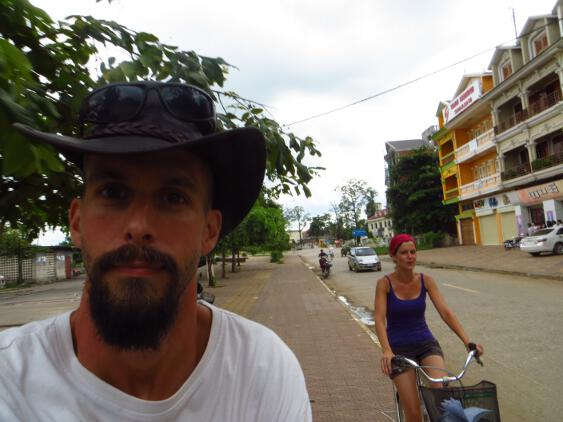
Battambang can be reached from Siem Reap by boat, across the lake but as we drove to it, we chose to hire bicycles to visit the town. Two architectural-slash-historical itineraries are available, as there are many remarkable building left from the French era. I hadn’t ridden a bike for a while and my bum was sore after an hour but it was indeed a very nice way to visit the city. We should do this more often, Cambodia is after all flat as a pancake for most part.
On our way South the next day, we stopped in two out of 21 “old houses” available to visit, both were built over a century ago. Following the road, I chose to listen to the GPS instead of common sense, and continued into a mud hole, where the mighty Troopy decided it couldn’t go on. There was so much mud the four BFG tyres slipped on and got no grip at all, in fact the more I pushed on, the closer the car was sliding towards the river. Right. We’re well and truly bogged. The diff-lock compressor is out (must fix that, by the way, this is new) and the winch pulled us up to a point then had enough as well. We had to call a tractor, wait an hour and pay 25USD to get out in five minutes.
I’m an idiot, my shoes are ruined, the car is filled with mud and I have no idea what’s wrong with the compressor.
Nevermind, it’s only mud, and pride. But it confirms our love for this country, and the Khmer. They are genuinely honest, kind, friendly, open and warm. I find a lot of similarities with Indonesia and Timor. Probably because for most part of these countries, tourism and Western way of life has not yet touched and corrupted them. If only it could remain that way.
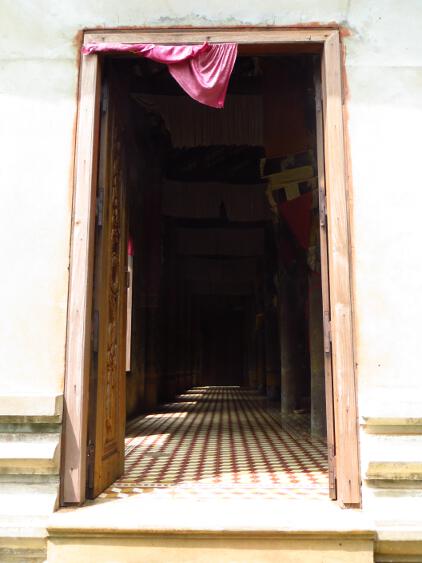
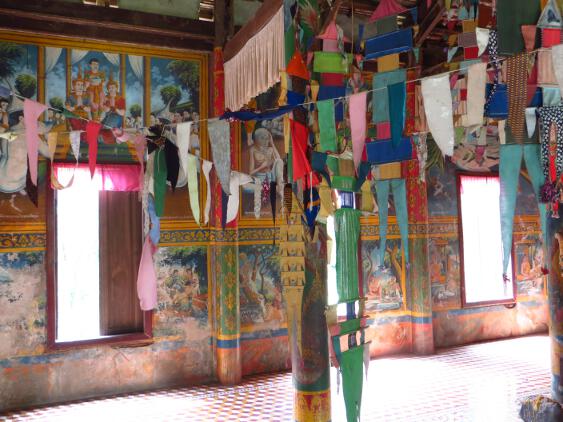
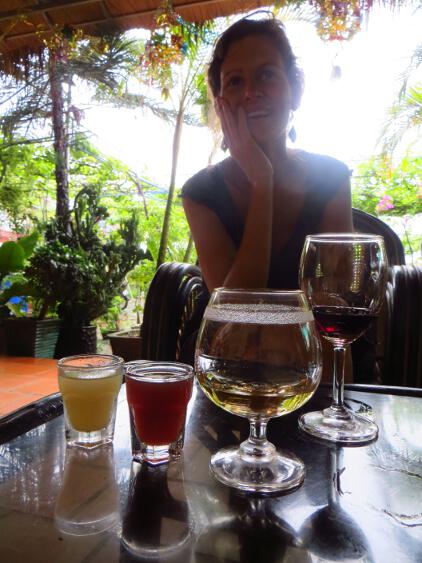
We took our time to visit the two closest temples (called “wat” in most South East Asian countries) and the local winery. It produces a red (Shiraz) which tastes more like cheap port, a brandy which could be of better use as turpentine and two fresh juices, grape and ginger. The juices were nice, but you have to admire the effort of the owners.
One of the temples has a cave, which is filled with bones and skulls. The Khmer Rouges used to beat the crap at the local villagers, then push them down the cave, some 30m down below. Today it is a shrine to the victims of the atrocities commanded by Pol Pot. Coincidently, Pol Pot died like a dog, and was cremated on a pile of rubbish close to where we crossed the border. Serves him right I’d say.
We left Battambang the next day, and chose the secondary roads to our next destination, the Cardamom Mountains. Unfortunately though, even the combination of the GPS, the map we bought and our navigational skills got us nowhere. So after two hours in the mud, I’m talking 30mkh for 2h in 30cm of mud and over flooded rice fields, driving on roads with potholes the size of a cow, we turned back to the main road, down to Pursat.
Cardamom Mountains, here we come.
KM to-day: 987km, total: 36105km.





















































































 RSS - Posts