

Kakadu National Park
7 June 2012
May 22nd.
To visit Kakadu properly, you really need to take your time. The pass is valid for 14 days, and there are more things to do here than you can think of. The park is about the size of Belgium, and runs from East of Darwin to Arnhem Land. It is unique in many ways, for instance it’s part of Unesco World Heritage, holds 50 percent of the fish varieties in Australia and more than 30 percent of Australia’s birdlife. Same goes for crocs, flora, insects, etc etc. Also, it is the only national park in the world that has a complete river system, from springs to ocean.
Anyways, since the park entry fees does not cover accommodation, we settled for one of the few bush-campground. Besides, we actually prefer the peace and quiet of bushcamping, versus the noisy caravan parks. So first stop, Kambolgie. It’s late in the afternoon so we just pitch the tent, gather firewood and chill.
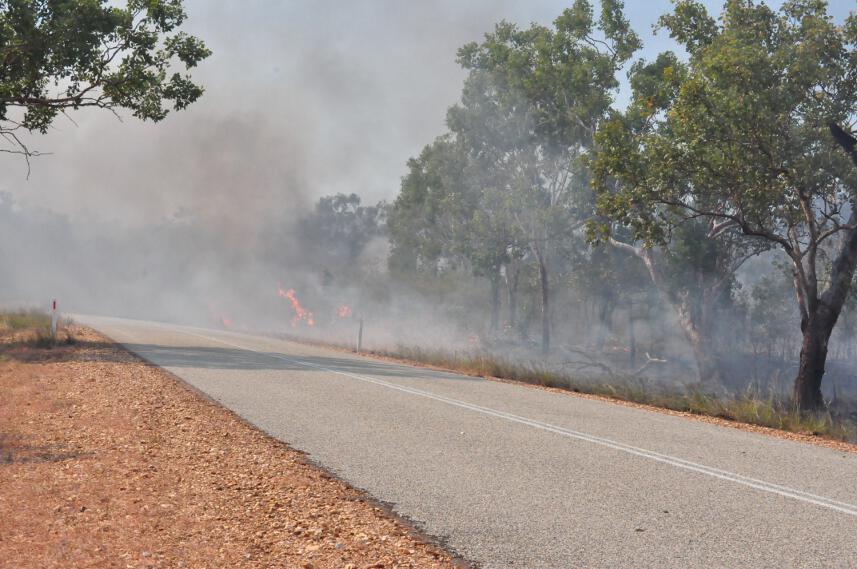
To reach camp, a bushfire has almost entirely blocked the road with thick smoke. Bushfires are deliberately lit by park rangers. They serve many purpose. The first is to burn any flammable debris and vegetation to prevent wild fires to spread. The second is to re-generate the soil if you like, most of the soil around here has been so much washed up by the floods and changes of water level (this was done over the past billion years), today it contains barely no nutrients. Plants here need what the fire leaves behind (carbon etc) to grow. There are a lot of purposes for these fires, let’s just say Bining people (you need to call Aboriginal people by their tribe name, just you do for Swedes or Portuguese people, there are more than “just one nation of Aboriginal people”) have used burning for thousands of years for a good reason.
Distance today: 155km, total: 18443km.
May 23rd.
We go 20km deeper into the park to Gunlom, to swim under a gigantic waterfall. The billabong is known for its freshwater crocodile but we haven’t seen him. That’s about all we did today: swim and chill. There is another billabong but its access is actually closed as a saltwater crocodile has been spotted.
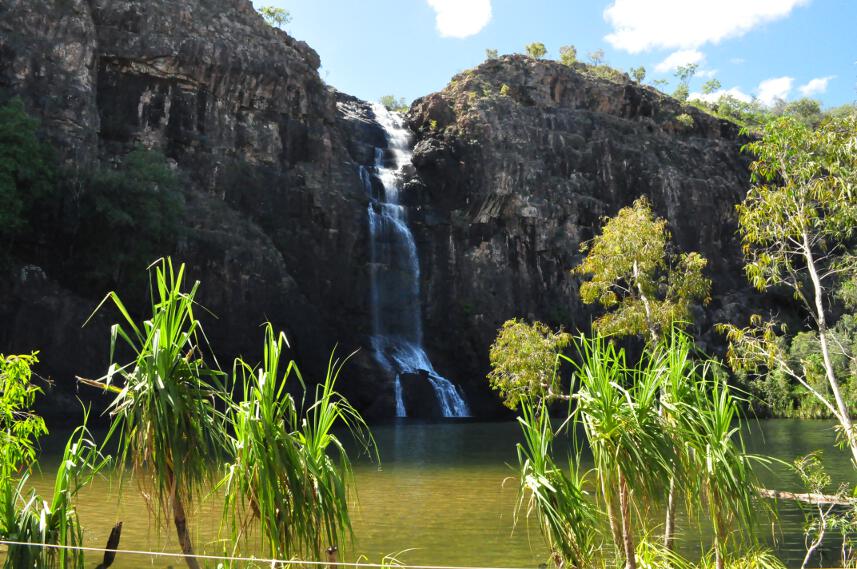
There are two kinds of crocodile in Australia, both can only be found in the north. From south of Broome to Brisbane, all these coastlines and river systems can or will have crocs in it.
While both kinds are direct descendant of dinosaurs, and will kill a man in a couple of seconds, freshwater crocodile, or freshie, live in rivers only, and are rather shy and non-aggressive to human. They eat fish, mostly. Saltwater crocodile, or saltie, live in both environments, are able to take down a fully grown buffalo or a horse, let alone a tourist, and are basically just a nasty killing machine.
Back at camp, another chocolate favourite of mine : melt about 100g of dark chocolate in a pan, add a big spoonful of salted butter. When it’s all smooth and shiny, add roughly 125mil of condensed sweet milk, mix it all and pour the chocolate mix into a jam jar. Let it cool down nicely.
The next day, cut a thick slice of bread (you know, the one you’ve just baked and is still warm from the oven), spread across a layer of salted butter then the chocolate spread you made yesterday, and voila, homemade chocolate spread, so much better than anything you’ve ever tasted. YAY !
Distance today: 44km, total: 18487km.
May 24th.
Kakadu rangers have talks and walks and slideshow about every second day, at just about every interesting spot in the park. The one at Gunlom is early in the morning, and takes us to the top of the waterfall, when we can see the vast area that spreads for miles around. Brett, our ranger, talks about plants, animals and the legend of Bula, the creator ancestor who now lives under water at Gunlom. We’re not supposed to swim too close to the waterfall, as it may disturb him and he’d be very angry.
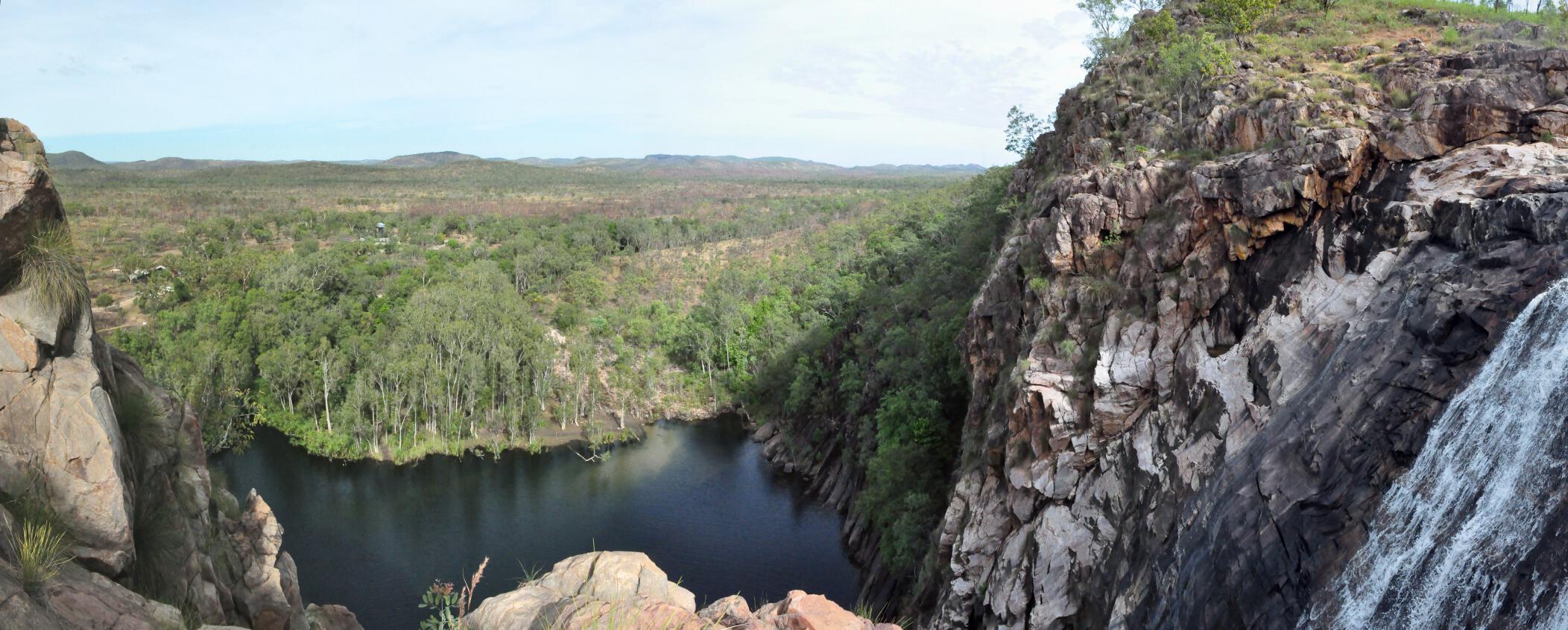
Accidently we learnt that this very billabong was used on Crocodile Dundee movie, when Mick Dundee jumps on the croc that just attacked the woman. The sandy beach and the paperbark tree that we see in the scene are the ones used on the set. Funny.
He also told us about the buffaloes, which were imported from Timor and Burma and are now the only ones in the world with that “pure gene”. There were thirty at first, for the settlers up north, then were released when the habitat proved to be to inhospitable for Englishmen. Now there are tens of thousands of buffaloes in the park, they eat a lot of protected flora and destroy many of the endemic wildlife. So every year, while a small number is captured and sent back to Timor for re-breeding that pure race, most of them are killed by park rangers and Traditional Owners who still live in the area.
Same story for the brumby, direct descendant of Mongolian horses, who now run free and wild in the park. A lot of these wild horses are captured and sent to either Mongolia on breeding programs, or to Brunei to be crossed with arab stallions and used in the races by the sultans over there.
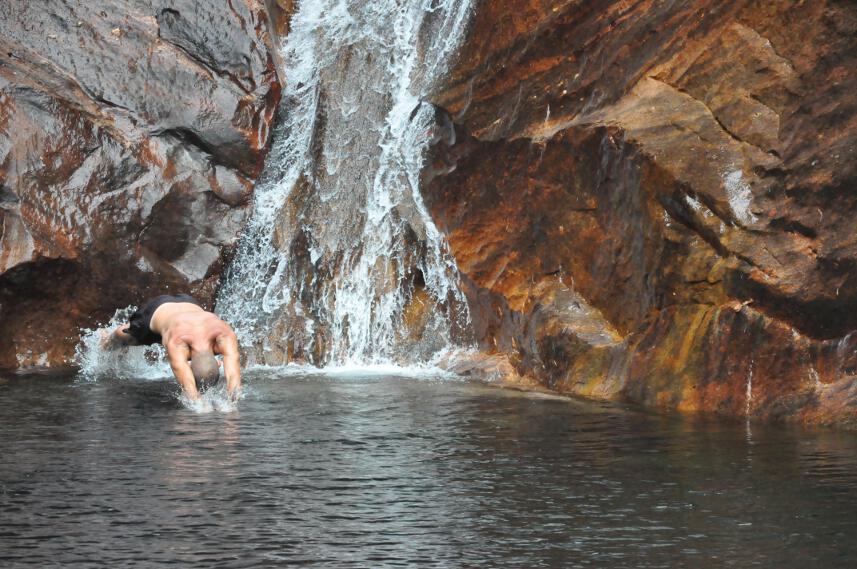
We leave Bret and walk to Yurmikmik, another waterfall about three hours walk from the main road. The walk is easy but we’re drenched in sweat by the time we get to the falls, and the cool water is a welcoming sight. We spend all afternoon there, enjoying the sun and relaxing. We’re all alone, it’s just amazing we can enjoy this great location on our own.
Distance today: 45km, total: 18532km.
May 25th.
Last day at Kambolgie. Wind has blown all night and at times we feared our tent would be swept away. The tent is really on its last journey, most zippers are broken, two poles are cracked and we need a piece of string to attach one of the flexible poles. Still, it held all night and kept us reasonably warm.
We leave camp to our next destination, Mardugal. On the way, a couple of lookouts then we head down the “lower parts” of Kakadu. We can definetely see the differences in the vegetation and the wildlife. Also the termite mounts are getting bigger and bigger.
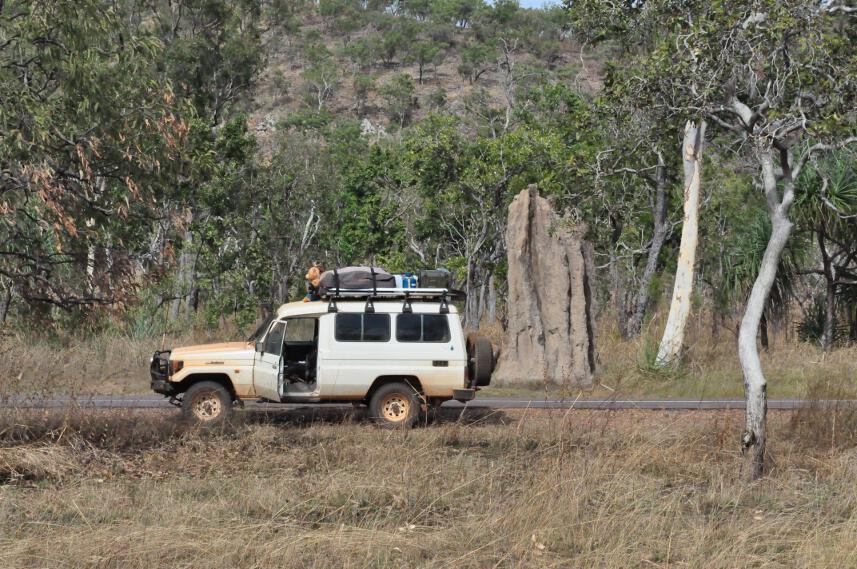
Termites are vital to Kakadu, they eat vegetation that would otherwise be burnt, therefore preventing bushfires, they also are part of a fragile food chain (some animals eat only termites, so if they’re destroyed, the whole food chain is compromised). Lastly they produce these big mounts which can then act as shelter for other animals.
The amazing thing about termite mounts is they are fire proof, flood proof and just about as solid as a rock. All that from a tiny translucent animal.
Next to Mardugal, the cultural centre displays a lot of information about the Bining and their culture. It’s one of the rare place where I’ve actually read a testimonial from a local, who’s talking about his youth spent with the catholic priests, he said “the more I think of it, the more I realize we were sent to these school to get the aboriginal culture out of us”. Pretty amazing I reckon, very contrasting from New Caledonia.
The cultural center is a must, a lot better then the one in Jabiru to be honest. And it’s free.
Distance today: 122km, total: 18654km.
May 26th.
Mardugal is so quiet, and we slept so badly the last couple of night, we decide to spend another day here. Watching DVDs and eating chocolate. Decadence is near…
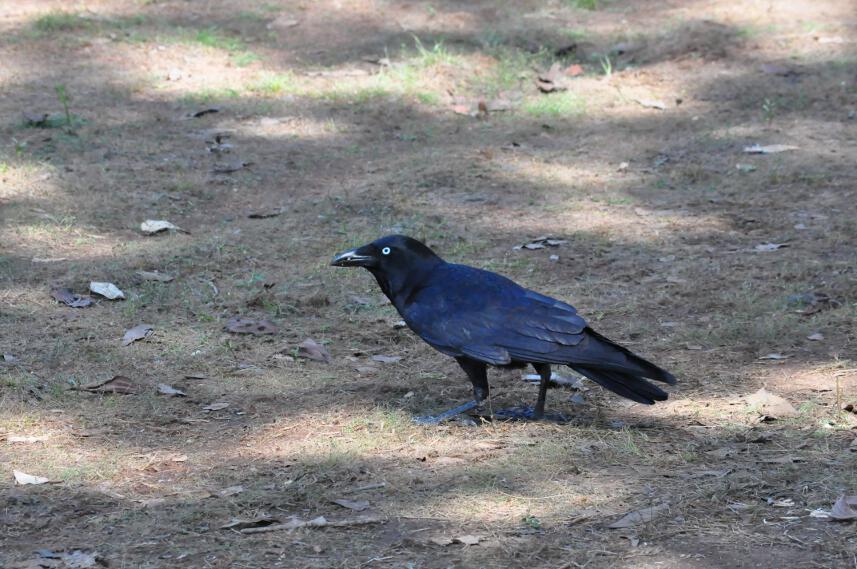
We did go see a slideshow a few klicks down the road and learnt a lot about the local fauna.
Distance today: 3km, total 18657km.
May 27th.
Early rise for yet another ranger’s walk. We’re the only two “clients” for this one. Seems nobody cares about the flora, especially not at 8AM.
We learn about plants, and their use in the Bining culture and cuisine. There’s a lot of uses for the local plants and fruits, where we’d see nothing but trees and forest, they’d see dinner and hunting tools.
We leave Mardugal to head east, and stop at Mirrai, where we see Troopy’s big brother : Trakka Adventurer !
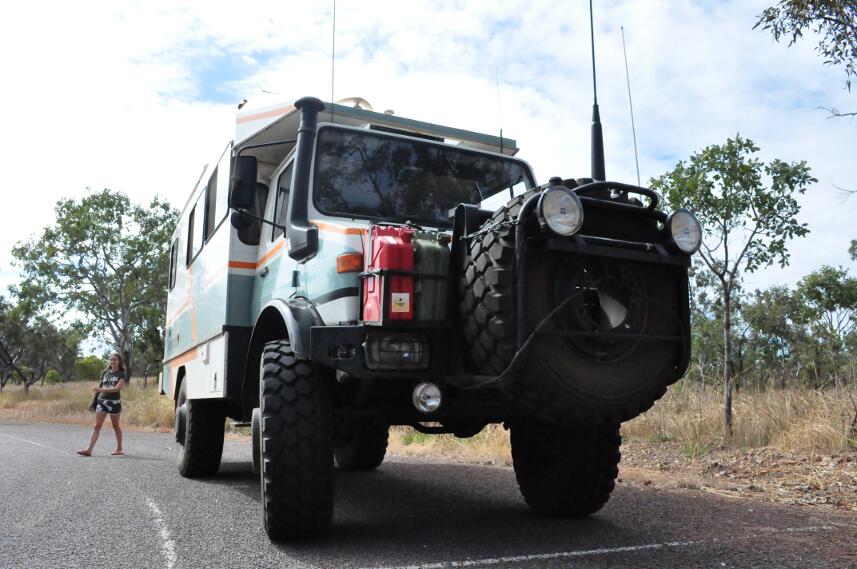
Now THAT’S a truck ! Damn I want the same !
At the lodge next door, we bump into my mate Nicolas, and his two companion on their road trip from Melbourne to Perth. The three of them have rented a campervan and pretty much follow the Stuart Haighway, then down from Katherine to Perth via the same route I took a couple of months ago. Nice to see a familiar face up here.
We all camp at Malabandjbandju, which is right next to a billabong, meaning gazillion of mozzies attack us. We pray for some wind.
Distance today: 49km, total: 18703km.
May 28th.
Late brekkie then off to Nawurlandja for the fist rock art site. It’s absolutely stunning.
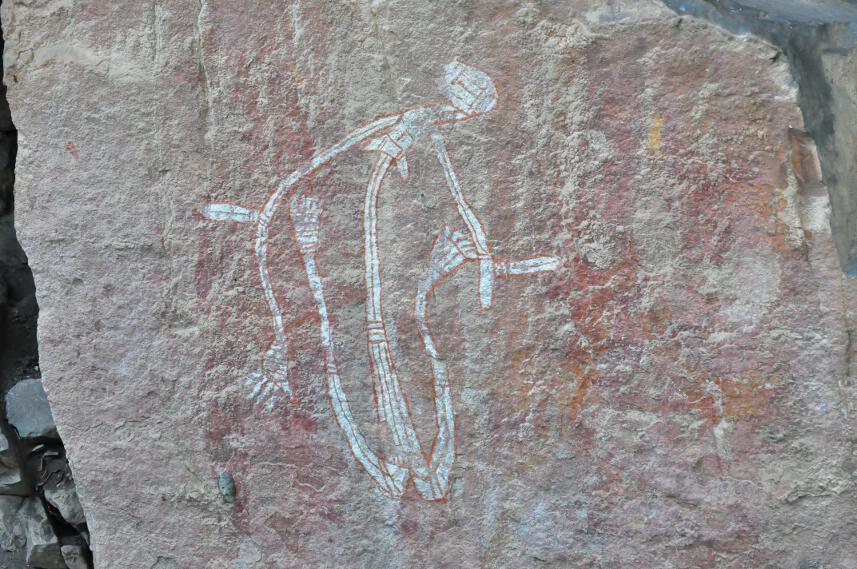
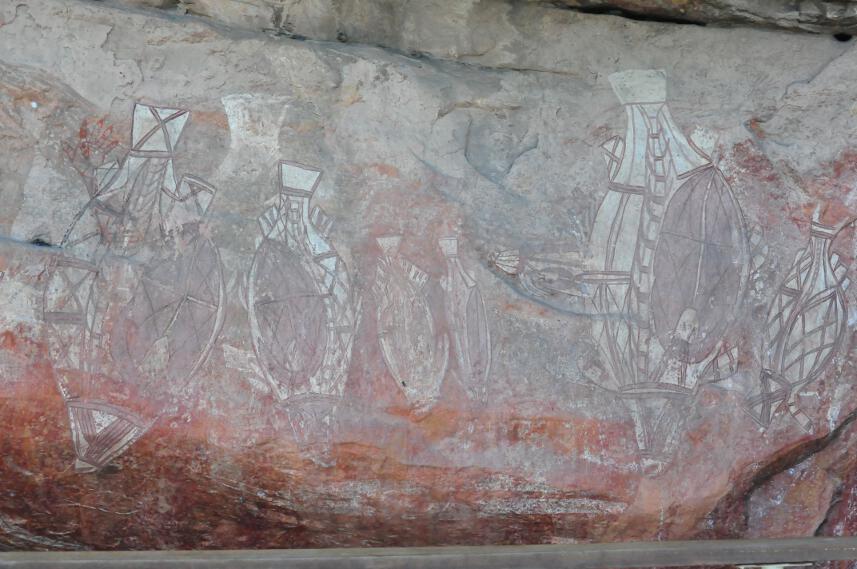
Second stop at Angbangbang for lunch with Nicolas, Pauline and Perrine, then a very explicative talk about the shelter and the paintings found here. Again, the archeologist have dated the site with excavation of artifacts found in the layers of the soil around the place.
one last talk at the lookout then we’re off to see the sunset over the valley.

Distance today: 52km, total: 18755km.
PS : on the way up to the lookout, I offered Claire to join me in Timor and Indonesia. Sweet !!!
May 29th.
Jabiru’s cultural center is more a tourist shopping center than anything else. We only stay for lunch then head for the centre of town. It’s the only town within the national park, and is rather big in fact. After the obvious stops at the supermarket we head for the caravan park. Nice surprise, for 40bux, you get a powered site with private bathroom. You have no idea what it means after almost four months of bush camping and toilet sharing to have your own toilet, shower, sink (with hot shower, and a mirror !) all that luxury. Beauty !
The o-ring on the gas regulator is buster, we need another gas stove or another regulator. Obviously you can’t find Coleman parts in Jabiru so it’ll have to wait for Darwin. Cold dinner tonight.
Distance today: 28km, total: 18783km.
May 29th.
We check out what’s to do in Jabiru, well in fact, not much really. After a quick walk around the lake, we’ve seen Jabiru. That’s it. Back to camp to watch DVDs, because tonight, there’s a bush tucker demo happening at the hotel, as part of the Reconciliation Week.
Reconciliation Week is an annual thing, to celebrate living as a community between indigenous and non-indigenous in Australia. A lot of events are happening all around the country, but obviously places where there are many Aboriginal people have a stronger feeling about it. So anyways, we decided to stay one more night at the caravan park to enjoy some bush tucker, we hoped to have a taste of turtle, yams, crocodile, etc.
It was scheduled at 7PM so we rocked up at 6:30PM. Greeted by a free beer over paintings and didgeridoo demonstration, our hopes were high… until at 7PM we went to the restaurant to learn it had already happen as organizers decided to have the event in the afternoon instead. Thank you for coming and good night.
Bugger !
Very disappointed, we headed home.
Distance today: 17km, total: 18800km.
May 31st.
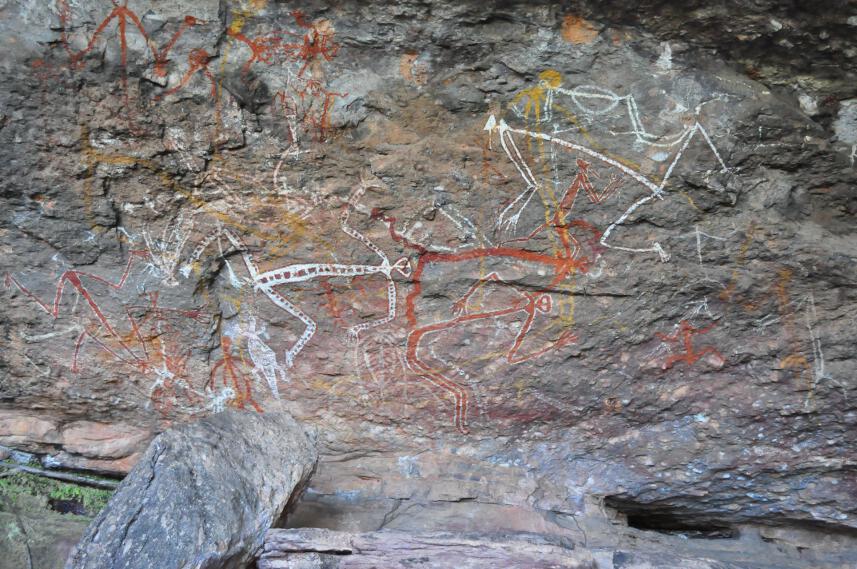
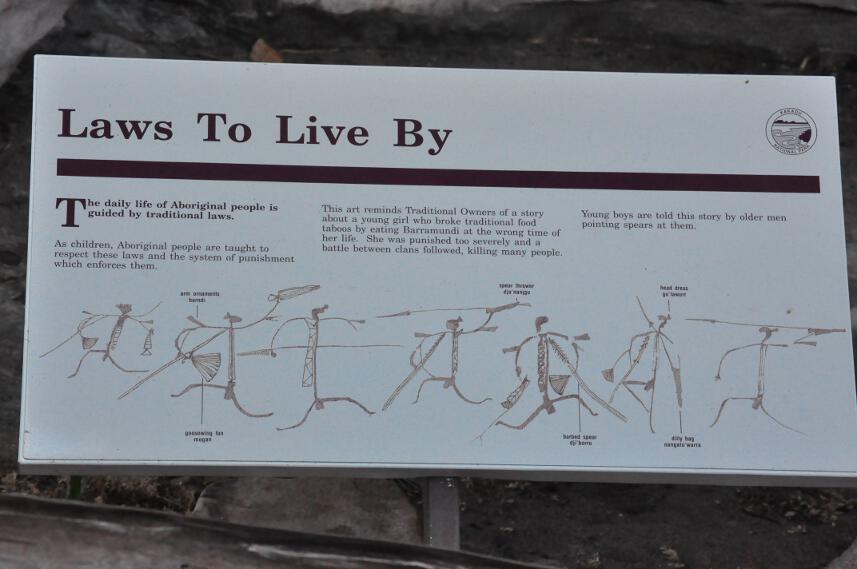
Last day in Kakadu, we both feel a bit weary, especially with last night mishap, so we left camp early to visit Ubirr, all the way east, with our last rock art site. The sites are actually quite amazing, though it does not teach us anything more in terms of techniques or anything, but the quantity of the painting, and their quality is well worth the trip.
Again, the painting vary from stick figure to xray type. It’s completely different from the Anangu people for instance, in the Tanami and around Uluru, who use dot-painting and little rock painting in fact, when the Bining people have a much more complex art form. I myself prefer dot painting but that’s just me.

After Ubirr, it’s time to head for Darwin, and hope the camping equipment shops are still open by the time we get there.
Shops close at 5PM, at 4:57 we enter the shop and buy a new regulator. Hot dinner tonight ?
Well, no. It’s not the regulator it’s the copper pipe that’s broken I think. Instead, we go into town after a quick shower to have dinner. Seafood platter, for 75bux, not bad. Thinking her allergies were to iodine, I give Claire a piece of oyster, since there isn’t hardly any iodine in the Tasmanian waters…
Big mistake…
Distance today: Unknown.


































 RSS - Posts